


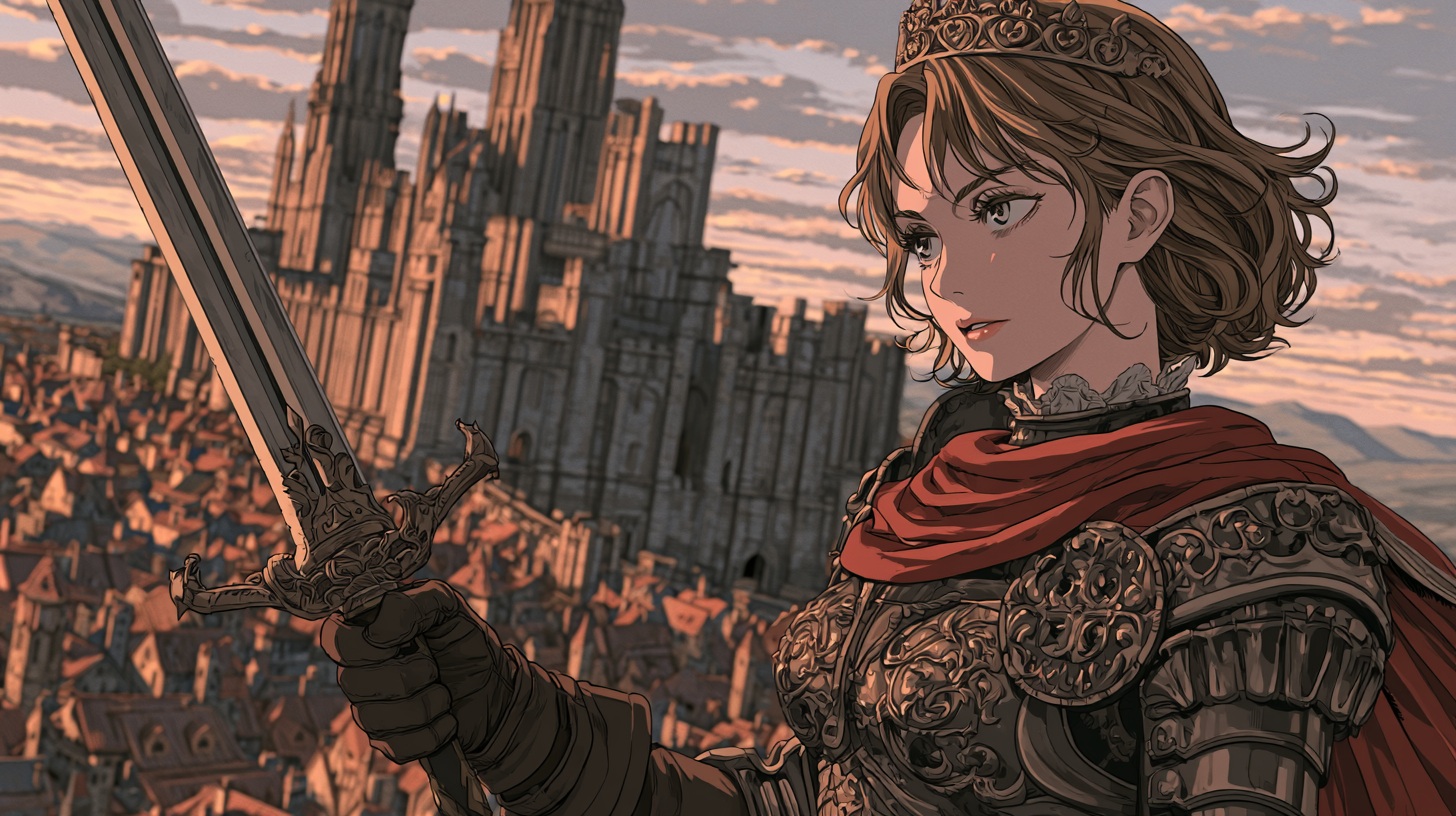
Quixotic Knight
Onward To Glory!
“I have dedicated my life to the cause of justice, mercy, honor, and truth. Unfortunately, none of them seem willing to contribute to my travel expenses.”
Every age produces practical people.
The Quixotic Knight exists to annoy them.
Practical people understand compromise. They recognize limitations. They accept that corruption cannot always be defeated, that injustice cannot always be corrected, and that some causes simply are not worth pursuing. They learn to measure success against reality.
The Quixotic Knight measures reality against ideals.
This habit rarely makes life easier.
Unlike traditional knights, the Quixotic Knight does not necessarily serve a crown, noble house, military order, or government. Their loyalty belongs to principles. Justice. Mercy. Honor. Hope. Compassion. Truth. Courage. The specific ideal matters less than the conviction that such things remain worth pursuing even when success appears unlikely.
Especially then.
To outsiders, this often appears foolish.
A Quixotic Knight may ride hundreds of miles to aid strangers they have never met. They may intervene in disputes that offer no reward. They may oppose powerful figures despite overwhelming odds. They may dedicate years to causes that everyone else abandoned long ago. Cynics shake their heads. Realists offer warnings. Pragmatists explain why failure is inevitable.
The Quixotic Knight listens politely.
Then proceeds anyway.
History maintains a complicated relationship with such people. Many become cautionary tales. They waste fortunes chasing impossible dreams. They sacrifice comfort for causes that achieve little. They dedicate themselves to quests no sensible person would attempt. Their lives often end in obscurity, disappointment, or tragedy.
History also remembers an uncomfortable number of them as heroes.
The distinction is not always obvious at the time.
This uncertainty lies at the heart of the archetype. Every celebrated hero appears unrealistic before success. Every impossible dream seems foolish until someone achieves it. Every great reform begins as an idea most people dismiss. The Quixotic Knight understands this instinctively. They recognize that practicality has its place, but they also know that no one ever changed the world by limiting themselves to what already seemed possible.
Their outlook attracts unusual allies.
The people most likely to assist a Quixotic Knight are often those who have not entirely surrendered hope. Teachers struggling to improve their communities. Priests tending forgotten shrines. Honest officials surrounded by corruption. Volunteers feeding the hungry. Activists challenging injustice. Ordinary citizens performing small acts of courage without expectation of recognition.
The Quixotic Knight notices such people.
More importantly, they believe such people matter.
Years spent pursuing lofty causes often produce a surprising degree of wisdom. Contrary to stereotype, most Quixotic Knights are not naïve. They have witnessed cruelty. They understand betrayal. They know that greed, violence, and selfishness exist. What separates them from cynics is not ignorance of these realities.
It is refusal to accept them as inevitable.
This distinction is important.
A cynic believes people are fundamentally disappointing. A Quixotic Knight believes people are fundamentally capable of better. The difference shapes every decision. One perspective lowers expectations. The other raises standards. Neither guarantees success, but only one leaves room for genuine inspiration.
The path is not without dangers.
Many Quixotic Knights struggle with disappointment. Ideals are easier to admire than to uphold. People fail. Institutions disappoint. Noble causes become complicated. Good intentions produce unintended consequences. The world stubbornly refuses to behave like a heroic tale. Maintaining hope in the face of such realities requires tremendous effort.
Some eventually lose heart.
Others become more determined.
The strongest among them learn a valuable lesson. The purpose of an ideal is not to guarantee victory. The purpose of an ideal is to provide direction. Justice may never be perfect. Mercy may not always prevail. Courage does not eliminate fear. Yet these principles remain valuable because they guide action even when outcomes remain uncertain.
This understanding transforms the Quixotic Knight from dreamer into example.
Their greatest achievements are often not the quests they complete or the villains they defeat. Rather, it is the effect they have upon others. A single person acting according to principle can inspire remarkable responses. Communities become braver. Cowards discover courage. Skeptics reconsider assumptions. People begin believing that perhaps things do not have to remain exactly as they are.
That possibility is powerful.
Perhaps that is why Quixotic Knights endure in every age. No matter how cynical the world becomes, there remain people who want to believe that honor matters, that kindness possesses strength, and that doing the right thing is worthwhile even when it is difficult.
The Quixotic Knight shares that belief.
Whether the world deserves it or not.
And that may be the most heroic thing about them.

“You cannot charge a dragon because it is the right thing to do every time you encounter a problem.”
“Why not?”
“Because eventually one of the problems will be a dragon.”
Type
Social Services



Comments