



Quartermaster
Linking The Chain
"The general received a parade. The quartermaster received three complaints, six missing invoices, and a warehouse fire. Only one of them accomplished something useful that week."
Most people notice an army when it marches.
You noticed everything that made the march possible.
The soldiers attracted attention. The officers issued commands. The generals received credit for victories and blame for defeats. Yet none of them could accomplish much without food, equipment, transportation, ammunition, medicine, shelter, and countless other necessities arriving where they were needed.
Someone had to ensure that happened.
That someone was often you.
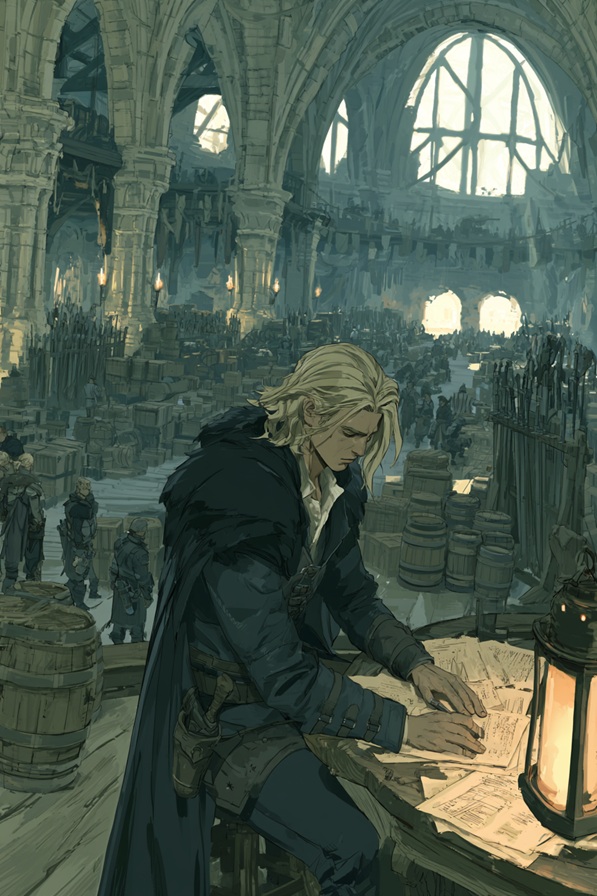
Whether you served a military force, naval fleet, mercenary company, city watch, expeditionary force, or another large organization, your responsibilities began where most people's understanding of logistics ended. Every item carried by a soldier, every ration consumed by a sailor, every horse pulling a wagon, and every arrow loosed in battle represented a problem that had already been solved by someone behind the scenes.
Quartermasters learn quickly that shortages are rarely dramatic at first.
A missing shipment becomes a delay.
A delay becomes an inconvenience.
An inconvenience becomes a crisis.
By the time most people recognize a problem, the opportunity to prevent it has often passed.
Your profession taught you to think several steps ahead. While others focused on today's requirements, you worried about next week's shortages and next month's deliveries. You learned to calculate consumption, track inventories, estimate needs, anticipate disruptions, and prepare alternatives for situations that had not yet occurred.
Planning becomes second nature after enough years of responsibility.
The work required far more than record keeping.
Many people imagine quartermasters as clerks buried beneath stacks of paperwork. While documentation certainly occupied a portion of your time, success depended just as much upon understanding people. Supplies do not move themselves. Inventories do not organize themselves. Shortages do not resolve themselves.
Every solution ultimately involved individuals.
Soldiers came seeking equipment they believed they deserved. Officers arrived demanding resources they considered essential. Merchants presented invoices that somehow exceeded previous estimates. Laborers required payment. Teamsters required directions. Warehouse workers required coordination. Sailors required replacements. Everyone needed something.
Often at the same time.
Managing those competing demands taught you patience, diplomacy, and the value of clear communication. It also taught you when firmness mattered more than popularity.
No quartermaster survives long by trying to make everyone happy.
The position provided a unique perspective on organizations. Most people see institutions through the lens of authority. They notice leaders, commanders, and public figures. Quartermasters see something different.
You see systems.
You see the supply chains supporting military campaigns. You see the labor keeping warehouses operational. You see the merchants providing materials, the clerks maintaining records, the craftsmen repairing equipment, and the countless workers whose efforts remain largely invisible.
Over time, you learned that large organizations rarely succeed because of brilliant leadership alone.
They succeed because thousands of details are handled correctly.
This understanding often creates a practical outlook on life. Quartermasters develop little patience for grand speeches unsupported by preparation. They understand that ambition means very little without resources and planning. A brilliant strategy remains useless if no one remembered to supply the people expected to carry it out.
Reality has a way of imposing itself on even the most impressive plans.
Years spent managing inventories also taught you the value of accountability. Records matter because memories fail. Inventories matter because assumptions become expensive. Documentation matters because disagreements inevitably arise.
The ledger does not care about rank, reputation, or confidence.
It only records what happened.
Many quartermasters develop an appreciation for systems that work reliably and frustration with those that do not. You learned to identify inefficiencies quickly. Waste attracts your attention. Disorganization makes you uncomfortable. Missing information immediately raises questions.
Not because you enjoy rules for their own sake.
Because you understand the consequences when details are ignored.
The profession also introduced you to an extraordinary variety of people. Quartermasters interact with soldiers, sailors, laborers, merchants, craftsmen, bureaucrats, officers, politicians, and opportunists. Some are competent. Some are not. Some are honest. Some are remarkably creative when attempting to explain discrepancies in inventory records.
Experience taught you how to recognize the difference.
You learned who could be trusted to fulfill commitments. You learned who consistently created problems. You learned which suppliers delivered quality goods and which merely offered convincing promises. Those lessons often prove as valuable as any formal education.
Even now, old habits remain difficult to abandon.
You notice shortages before others do. You instinctively calculate whether available resources match anticipated needs. You pay attention to transportation routes, warehouses, inventories, and supply chains. When plans are discussed, part of your mind automatically evaluates whether the necessary resources actually exist.
Most people see the finished result.
A quartermaster sees everything required to make it possible.
Where others notice the army, the expedition, the fleet, or the institution, you find yourself studying the machinery that keeps it functioning.
Most people ask who is in command.
A quartermaster asks who is keeping everyone supplied.
"Amateurs discuss strategy. Professionals discuss supply. Veterans discuss why the supplies never arrived."
Type
Military



Comments