


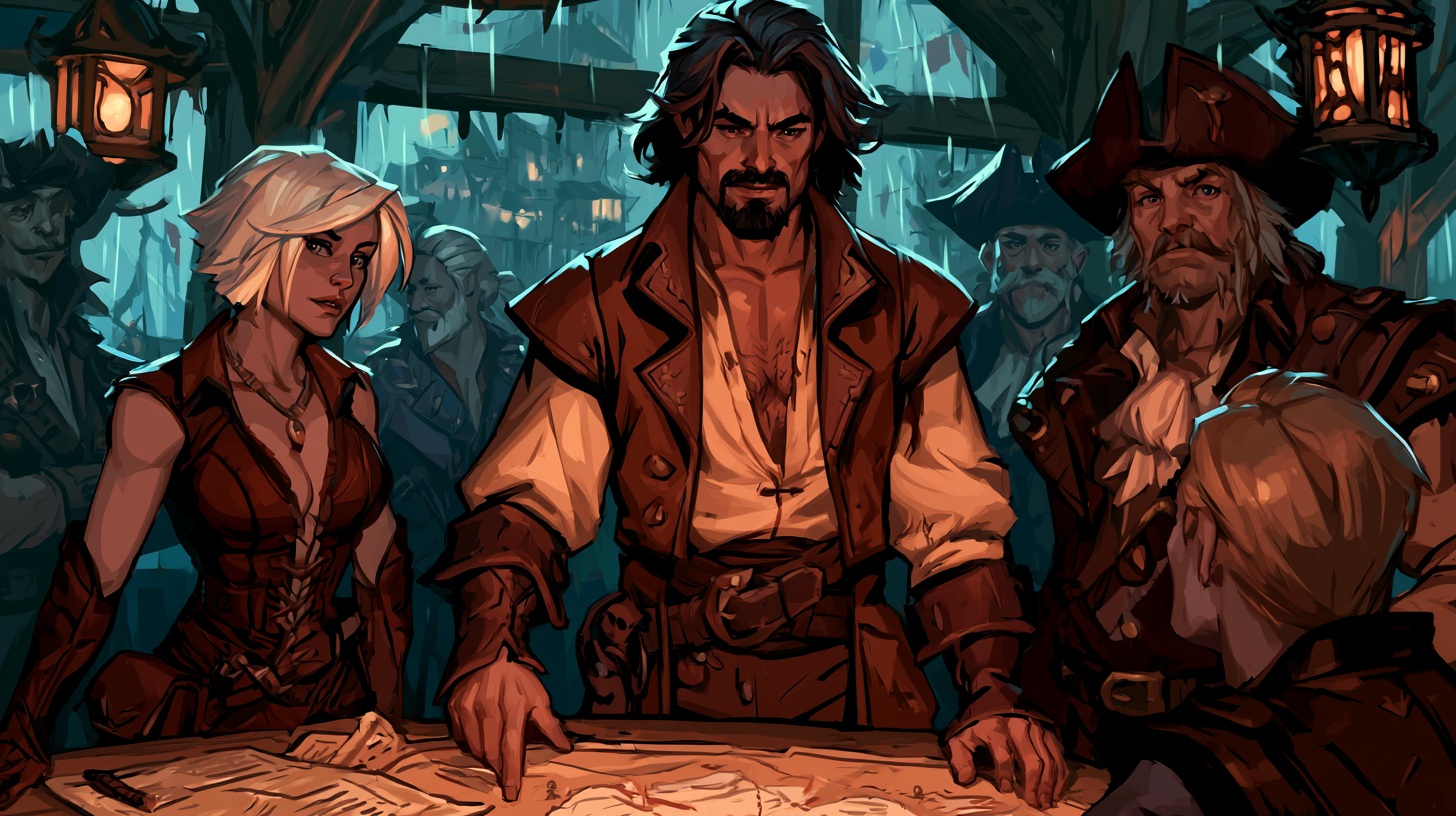
Privateer

For King And Country

“A pirate steals because he wants your cargo. A privateer steals because someone important wants your cargo. The distinction pays remarkably well.”
— Lady Maris Blackwake, Letters from the Sapphire Coast
Most people think they understand the difference between a merchant, a sailor, a pirate, and a soldier.   Privateers know better.   The sea has always been a place where legality becomes negotiable. A captain carrying a royal charter may be celebrated as a patriot in one harbor and condemned as a criminal in the next. A merchant vessel today may become a naval auxiliary tomorrow. A pirate may receive a pardon and emerge as a respected privateer. A privateer may lose official support and discover that yesterday's patriot has become today's outlaw.   The distinction often depends less upon actions than upon paperwork.   Privateers make their living in that uncertainty.   Armed with letters of marque, military commissions, trade warrants, or similar authorizations, they operate in the space between commerce and conflict. Governments employ them when maintaining large fleets proves expensive. Merchants support them when trade requires protection. Ambitious captains embrace the profession because it offers opportunities unavailable through more respectable careers.   After all, a captured enemy vessel can be remarkably profitable.   This reality shapes the privateer's perspective. While others debate ideals, loyalties, and causes, privateers develop a habit of examining incentives. Experience teaches that every conflict creates beneficiaries. Every embargo enriches someone. Every shortage creates opportunity. Every war redistributes wealth.   Flags matter.   Profit matters more.   This does not necessarily make privateers cynical. Many serve their nations faithfully. Some genuinely believe in the causes they support. Others dedicate themselves to protecting trade routes, defending communities, or hunting dangerous pirates.   They simply understand that noble speeches rarely explain events completely.   Following the money often reveals truths hidden behind official narratives.   The profession requires an unusual combination of skills. Successful privateers must navigate politics as comfortably as they navigate oceans. They negotiate contracts, evaluate cargoes, assess risks, interpret laws, understand markets, and cultivate relationships with merchants, officials, sailors, financiers, and occasionally criminals.   Especially criminals.   The boundary between legitimate commerce and illegal enterprise often proves remarkably difficult to identify from the deck of a ship.   This ambiguity attracts certain personalities. Privateers tend to be practical people. They are accustomed to dealing with competing interests, uncertain loyalties, and rapidly changing circumstances. They understand that today's ally may become tomorrow's rival and that yesterday's enemy may suddenly become valuable.   Adaptability becomes essential.   So does skepticism.   A privateer who accepts every explanation at face value rarely remains successful for long.   In lands scarred by the Shattering, these talents remain valuable. Trade routes shift constantly. Old powers decline while new ones emerge. Merchant consortiums compete with noble houses. City states challenge kingdoms. Smugglers exploit gaps in authority. Entire regions depend upon fragile networks of commerce stretching across dangerous waters.   Someone always profits from these conditions.   Privateers learn to identify who.   Many eventually leave the sea behind, but few lose the habits their profession instilled. Former privateers often become merchants, advisors, investigators, diplomats, traders, financiers, or political operatives. Years spent tracking cargoes, contracts, and competing interests provide insights useful far beyond the waterfront.   The instincts remain.   Who benefits?   Who loses?   Who gains if the current arrangement changes?   These questions often reveal more than official reports ever could.   Perhaps that is the profession's defining lesson. Most people see events. Privateers see incentives. Most people notice declarations. Privateers examine consequences. Most people focus upon conflict itself.   Privateers follow the prize.   Because long experience has taught them something important.   Ships sail because someone profits.   Wars begin because someone profits.   And more often than not, the truth can be found somewhere between the cargo manifest and the treasury ledger.
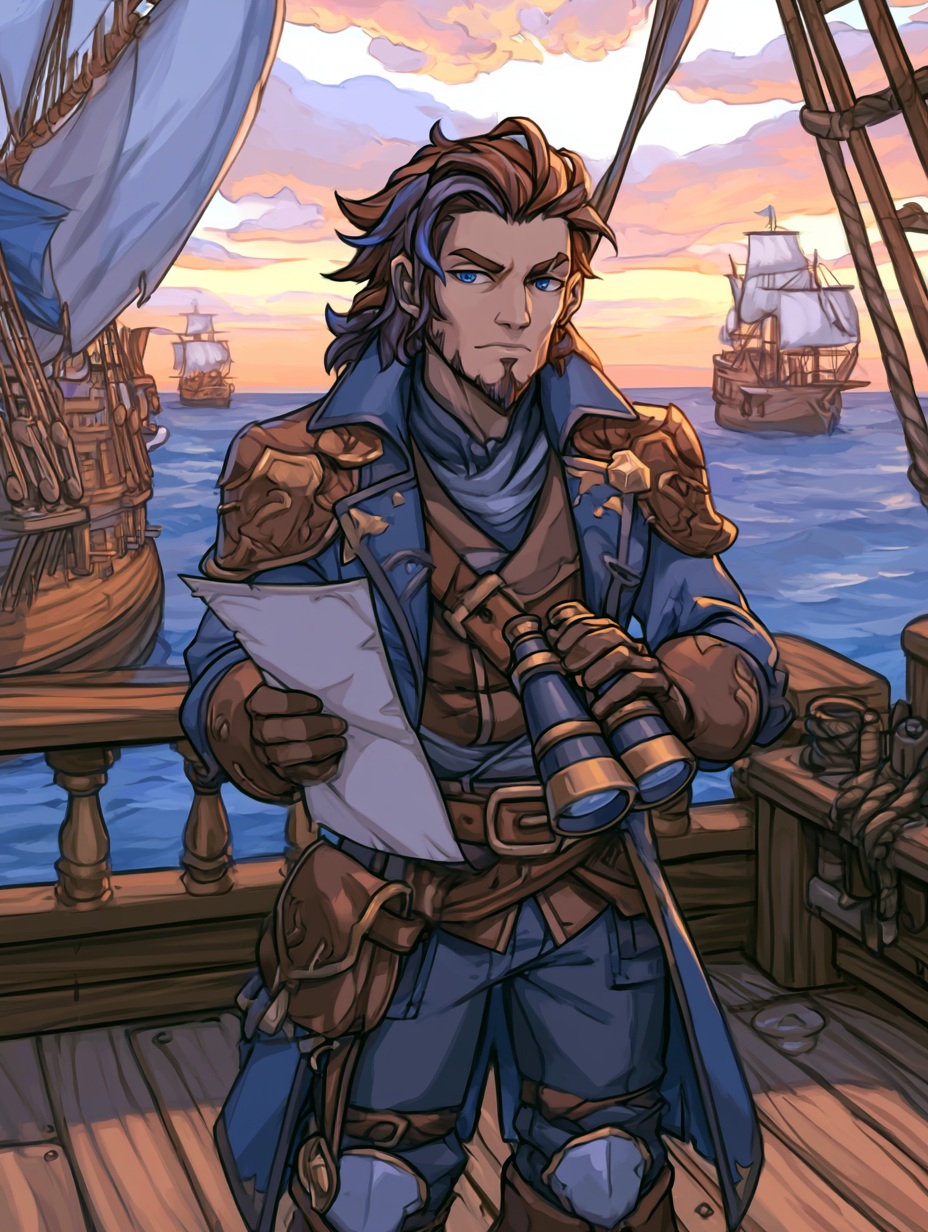
“The admiral spoke of honor. The merchant spoke of duty. The minister spoke of necessity. The cargo manifest spoke of profit. I learned long ago which one was telling the truth.”
— Captain Roderic Vane, before the Admiralty Inquiry
Type
Illicit

Privateer

Overview:
The line between patriot, pirate, mercenary, and criminal is often thinner than most people care to admit.   You made your living operating on that line.   Armed with a letter of marque, royal charter, trade warrant, military commission, or some other legal sanction, you preyed upon the enemies of those willing to pay for the service. Whether hunting pirates, disrupting trade, raiding shipping, intercepting contraband, or enforcing economic warfare, you learned that conflict is rarely about ideals alone.   Ships sail because someone profits. Wars begin because someone profits. Sometimes peace does too.   You learned to look beyond flags, laws, and declarations to see the interests that truly drive events.   Most people see the conflict. You learned to follow the prize.
Skill Proficiencies: Insight, Persuasion
Tool Proficiencies: Water Vehicles
Languages: One of your choice
Equipment:
A letter of marque, charter, warrant, or similar document authorizing your former activities, a navigational chart marked with routes and notes, a keepsake taken from a successful prize, a set of traveler's clothes, and a pouch containing 10 gp
Features:

Follow the Prize

Years spent navigating the murky boundaries between commerce, conflict, and legality have taught you to recognize who stands to benefit from a situation.   In settlements, ports, trade routes, military installations, and other organized communities, you can usually identify the individuals, organizations, factions, or interests that profit from local conflicts, restrictions, shortages, trade patterns, political decisions, or other circumstances that create winners and losers.   You can often determine who controls valuable resources, who benefits from existing arrangements, and who might gain from disrupting them.   The DM determines what information is available and how it may be discovered.
Suggested Characteristics: Most people see war, trade, and politics as separate matters. Privateers rarely make that mistake.   Some operate with official approval. Others possess charters whose legitimacy is disputed. Many eventually leave the sea behind while retaining the instincts that made them successful: identifying incentives, understanding competing interests, and recognizing who truly benefits from events.   In lands scarred by the Shattering, trade routes have shifted, old monopolies have collapsed, and new powers compete for resources and influence. Merchant consortiums, noble houses, city-states, guilds, and emerging kingdoms all seek advantage. Privateers thrive in these uncertain spaces, serving governments, merchants, rebels, or themselves as circumstances demand.   A merchant follows the market. A sailor follows the route.   A privateer follows the prize.

What Was Your Most Valuable Prize?

d8Prize
1A cargo whose contents were not what anyone expected.
2A vessel carrying politically sensitive passengers.
3A shipment linked to a powerful conspiracy.
4A chart showing routes unknown to most navigators.
5A relic believed lost at sea.
6Evidence of corruption among influential figures.
7A prize that disappeared before it could be claimed.
8Something so valuable that people still search for it.
Personality Trait:
d8Trait
1I always want to know who profits from a situation.
2I distrust simple explanations for complicated events.
3I enjoy negotiating from a position of strength.
4I pay close attention to trade, commerce, and logistics.
5I prefer practical solutions to ideological ones.
6I am comfortable dealing with questionable people.
7I rarely judge others for doing what they must to survive.
8I enjoy finding opportunities others overlook.
Ideal:
d6Ideal
1Freedom. Excessive authority invites resistance. (Chaotic)
2Profit. Opportunity should not be wasted. (Neutral)
3Loyalty. I honor my obligations. (Lawful)
4Pragmatism. Results matter more than appearances. (Any)
5Independence. I refuse to be owned by anyone. (Chaotic)
6Justice. Some predators deserve to be hunted. (Good)
Bond:
d6Bond
1A rival captain still owes me a debt.
2I lost a valuable prize under mysterious circumstances.
3Someone financed my operations when nobody else would.
4A route I once controlled has become dangerously important.
5I possess evidence linking powerful people to illegal activities.
6I am searching for a vessel believed lost with all hands.
Flaw:
d6Flaw
1I often assume everyone has an ulterior motive.
2I find rules easier to respect than to obey.
3I sometimes value profit more than principle.
4I trust contracts more than promises.
5I struggle to resist a lucrative opportunity.
6I often treat alliances as temporary arrangements.

Comments

Please Login in order to comment!
Powered by World Anvil