


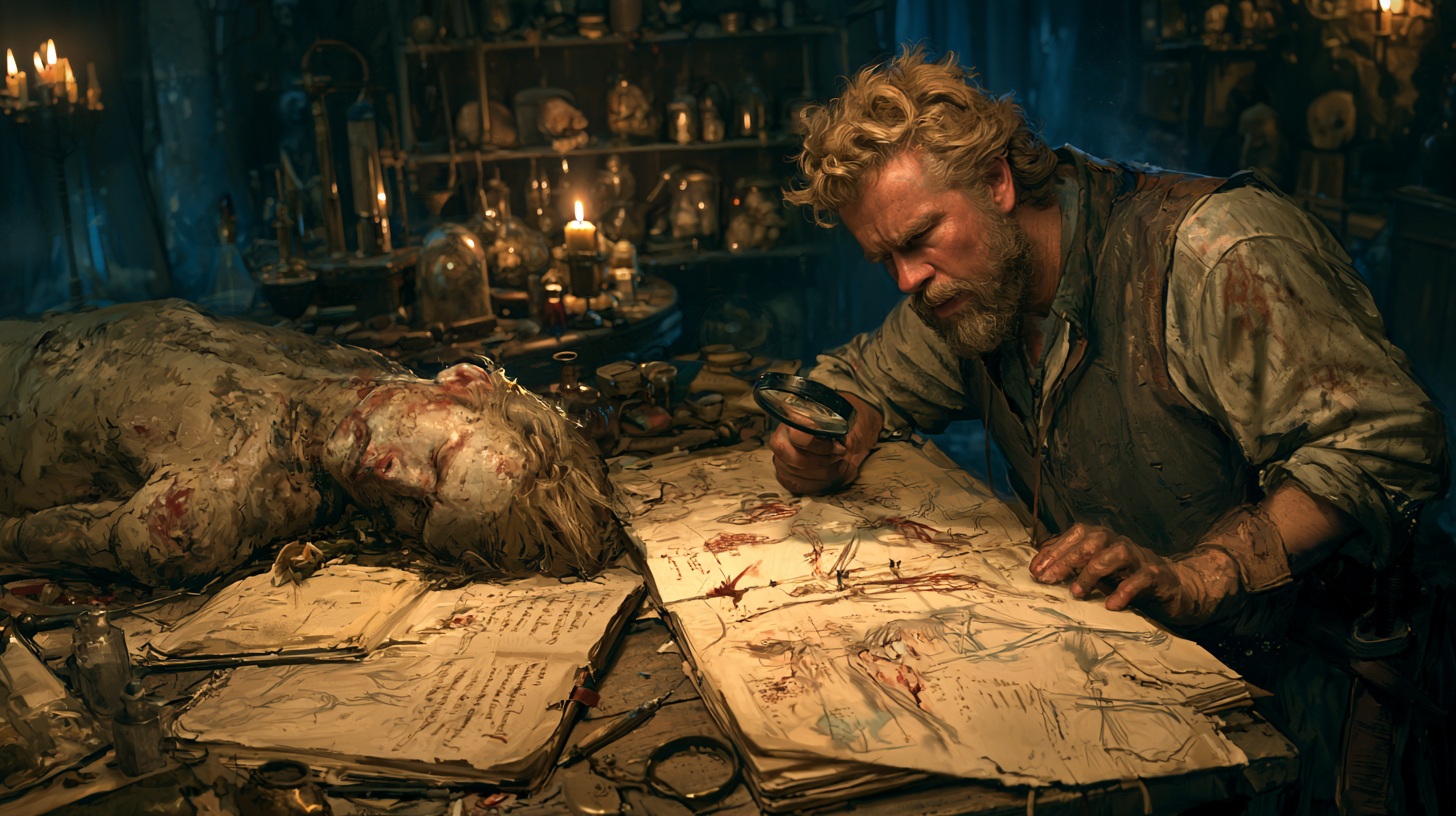
Pathologist
Causes of Death
"Case 44-19. Victim's husband insisted she slipped on the staircase. The bruising suggests otherwise. Curiously, so does his sudden interest in leaving the city before I finished my examination."
Death is one of the few things every society claims to understand.
Most are mistaken.
The average person sees death only occasionally. A funeral. A battlefield. A sickbed. A tragic accident. They witness the end result and construct explanations around it. Some explanations are correct. Many are not. Fear, grief, rumor, superstition, politics, and wishful thinking have a remarkable ability to obscure reality.
The Pathologist exists to cut through those illusions.
Their profession is founded upon a simple but uncomfortable principle. Every death occurred for a reason. That reason may be hidden, complicated, inconvenient, or horrifying, but it exists nonetheless. The responsibility of the Pathologist is to discover it.
This work places them in a peculiar position within society. They are neither healers nor mourners, though they often work closely with both. Physicians attempt to prevent death. Priests guide souls beyond it. The Pathologist arrives afterward, when prevention has failed and grief has already begun. Their concern is not what might have happened but what did.
The dead, after all, are often more reliable witnesses than the living.
A corpse cannot forget details. It cannot conceal evidence. It cannot alter its story under pressure or accept a bribe to change its testimony. Every wound, fracture, poison, disease, and injury leaves traces. The challenge lies in learning how to interpret them correctly.
Most Pathologists spend years studying anatomy, disease, chemistry, and the gradual processes of decay. They learn how bodies respond to trauma, how poisons alter organs, how illnesses spread through communities, and how environmental conditions affect remains. To outsiders, such expertise often appears unsettling. To the Pathologist, it is simply another form of literacy. Where others see a body, they see information.
This knowledge makes them invaluable during moments of uncertainty. Suspicious deaths attract their attention. Murders demand their expertise. Magistrates seek their conclusions before issuing judgments. Physicians consult them when confronting unfamiliar diseases. Military commanders rely upon them during outbreaks that threaten entire campaigns. Even powerful nobles eventually discover that rank offers little protection against mortality and often require answers that only a trained investigator of death can provide.
Such responsibilities carry risks.
The truth behind a death is not always welcome.
A grieving family may prefer an accident to a suicide. Political authorities may prefer a natural death to an assassination. Religious institutions may dislike evidence that contradicts accepted doctrine. Criminal organizations rarely appreciate investigations that expose their activities. The Pathologist frequently discovers that uncovering facts is considerably easier than convincing others to accept them.
Many develop a reputation for stubbornness as a result.
Others acquire enemies.
The profession also shapes one's view of life itself. Few people spend years examining mortality without changing in some way. Some Pathologists become detached, treating death as a technical problem to be solved. Others grow more compassionate, recognizing how fragile life truly is. Many develop a dark sense of humor born from constant exposure to tragedy. Nearly all learn to remain calm during circumstances that leave ordinary people shaken.
This composure is often mistaken for indifference.
Usually it is not.
Most Pathologists care deeply about the people whose stories they investigate. They simply express that concern differently. A grieving relative may seek comfort through prayer or remembrance. The Pathologist seeks it through answers. Identifying a poison. Exposing a murderer. Correcting an official report. Providing certainty where confusion once existed. In their own way, these acts represent a form of respect.
The profession attracts curious minds. Pathologists tend to dislike mysteries that remain unsolved. An unexplained death can linger in their thoughts for years. Forgotten cases gather dust in journals. Old notes are revisited. Evidence is reconsidered. Many continue investigating long after everyone else has moved on.
Occasionally they discover the answers they were seeking.
Occasionally they discover reasons those answers were hidden.
This pursuit of truth places them at the intersection of medicine, law, science, and human nature. They witness people at their most vulnerable. They study the consequences of violence, neglect, disease, greed, and misfortune. They learn quickly that death itself is often straightforward.
People are considerably more complicated.
Perhaps that is why so many Pathologists eventually adopt the same philosophy. The dead rarely deceive anyone. The living do so constantly. As a result, the surest path toward understanding often begins not with a witness statement or a confession, but with a careful examination of the one participant in the story who no longer has any reason to lie.
The corpse never speaks.
Yet for those who know how to listen, it says quite a lot.
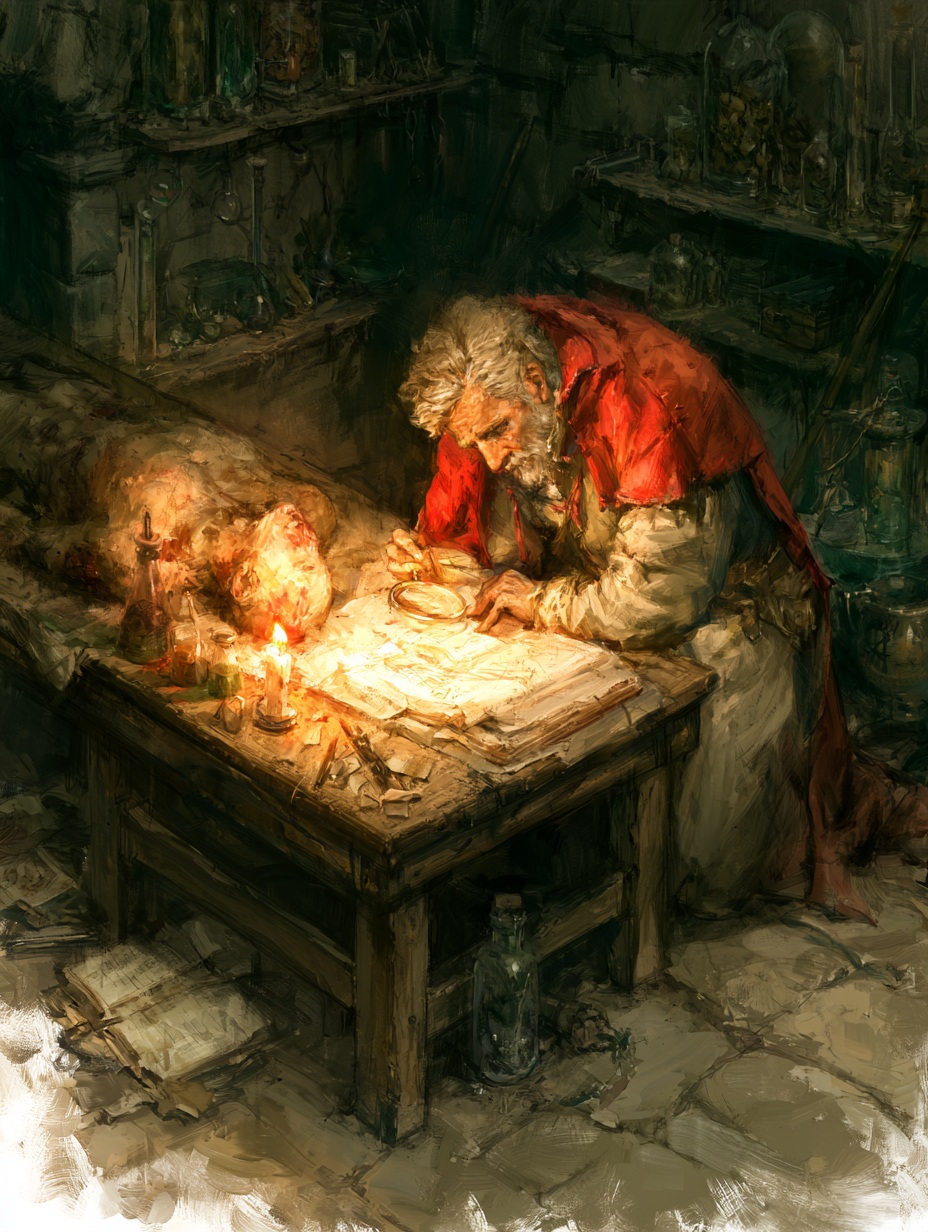
"Case 11-73. Cause of death appears to be poison. Cause of poisoning appears to be greed. The latter remains regrettably more common."
Type
Medical



Comments