


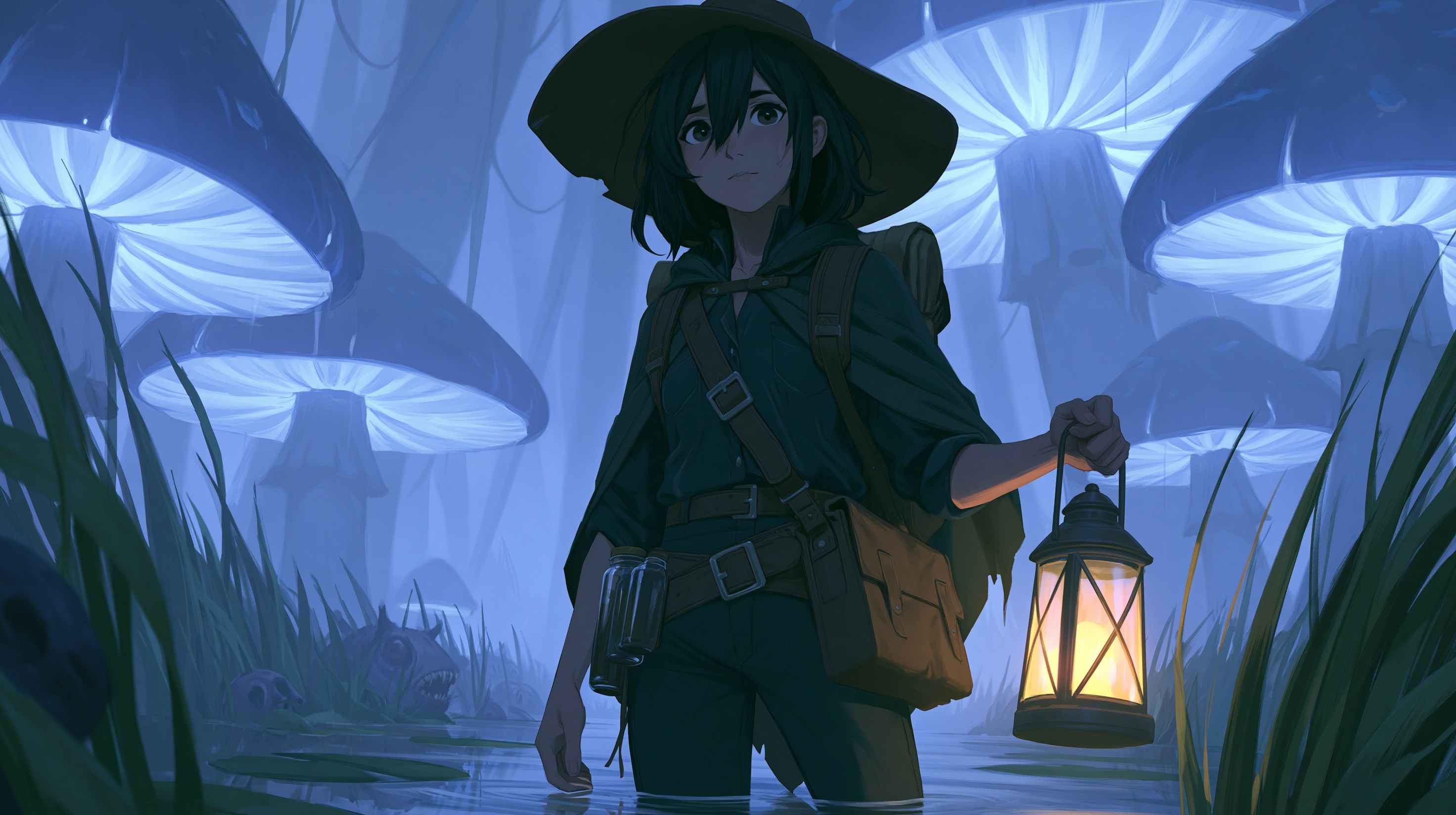
Naturalist
All Of Outdoors
“Most travelers see claw marks and ask what kind of beast made them. A Naturalist asks why the beast abandoned its normal hunting grounds in the first place. That's usually the more frightening question.”
The Naturalist is the sort of person most civilized folk mistake for harmless right up until they realize exactly what that calm expression is attached to.
They are not woodsmen in the romantic sense. Not hunters swapping campfire stories or mystics speaking to trees beneath moonlight. A Naturalist studies the wilderness the way a surgeon studies anatomy or a detective studies a crime scene. Forests become systems. Swamps become laboratories. Predators become evidence of larger environmental pressures unfolding quietly beneath the surface of the world.
Most people see nature as scenery.
Naturalists see behavior.
They notice migration patterns changing before famine hits nearby settlements. They recognize when birds stop singing because something higher on the food chain has entered the region. They know the difference between ordinary fungal growth and spores altered by corrupted magic. A Naturalist can walk through a forest for ten minutes and emerge deeply unsettled while everyone else insists nothing looks wrong.
That instinct usually proves accurate.
Many begin their studies under druids, herbalists, scholars, or expeditionary guilds tasked with cataloging dangerous regions after the Shattering reshaped so much of the world’s ecology. Others are self taught wanderers who survived because they learned quickly that the wilderness rewards observation far more consistently than bravery. Either way, the work changes people.
Long periods spent alone in hostile environments produce a certain temperament. Naturalists often speak quietly, watch constantly, and react to danger with unsettling calm. Where another traveler panics at strange tracks outside camp, the Naturalist kneels beside them with academic fascination and starts measuring stride depth.
This does not reassure anyone.
Their journals are infamous among adventurers. Water stained collections of diagrams, specimen sketches, weather patterns, migration routes, and deeply concerning notes written in margins at three in the morning. Some contain observations valuable enough to change regional policy or prevent catastrophe. Others contain records of creatures and environmental anomalies most readers would prefer did not exist at all.
And sometimes those journals disappear.
That happens more often than it should.
The profession attracts people who eventually stumble across things powerful interests would rather leave buried. Corrupted watersheds tied to industrial alchemy. Forests altered by ancient arcane experiments. Species quietly driven extinct to protect trade routes or political agreements. A Naturalist asking too many questions about why an ecosystem changed suddenly becomes inconvenient very quickly.
Especially when they are correct.
The best Naturalists develop an almost frightening ability to read environments the way politicians read crowds. They understand that nature is always communicating, even when nobody else recognizes the signs. Dead insects clustered around clean water. Moss growing in patterns that should not occur naturally. Animal behavior changing days before a storm no ordinary sailor predicted.
To them, these are not mysteries.
They are symptoms.
That perspective often leaves Naturalists alienated from urban society. Cities feel artificial to them, disconnected from the systems supporting them. Many become impatient with people who dismiss obvious environmental danger because it interferes with commerce or comfort. Others retreat into dry academic detachment, discussing horrific creatures and ecological collapse with the same tone someone else might use to discuss crop rotation.
This can make them difficult company.
It also makes them invaluable.
Expeditions hire Naturalists because they survive things others do not notice until too late. Adventurers rely on them to identify toxins, track dangerous creatures, and recognize when an environment itself has become hostile in ways steel and spellcraft cannot solve directly. Rural communities often treat them with cautious respect because people living close to the land understand something city dwellers frequently forget.
Nature lies less often than people do.
Still, there is a darkness that settles over many who spend enough time studying the world this way. The deeper they look into ecosystems, corruption, adaptation, and survival, the harder it becomes to maintain comforting distinctions between natural and unnatural. Predators evolve. Parasites thrive. Entire environments reshape themselves around catastrophe with horrifying efficiency.
And sometimes the wilderness adapts to things it never should have survived at all.
Veteran Naturalists occasionally return from expeditions quieter than before. They stop sleeping normally. They stare too long at tree lines. They begin recording observations nobody else understands, diagrams of growth patterns or migration routes that seem meaningless until compared against disappearances, ruined villages, or regions where the wildlife has started behaving wrong.
Very wrong.
Because eventually every true Naturalist arrives at the same dreadful realization.
Nature does not care whether something is good, evil, sacred, or monstrous.
If it survives long enough, the world will eventually find a place for it.
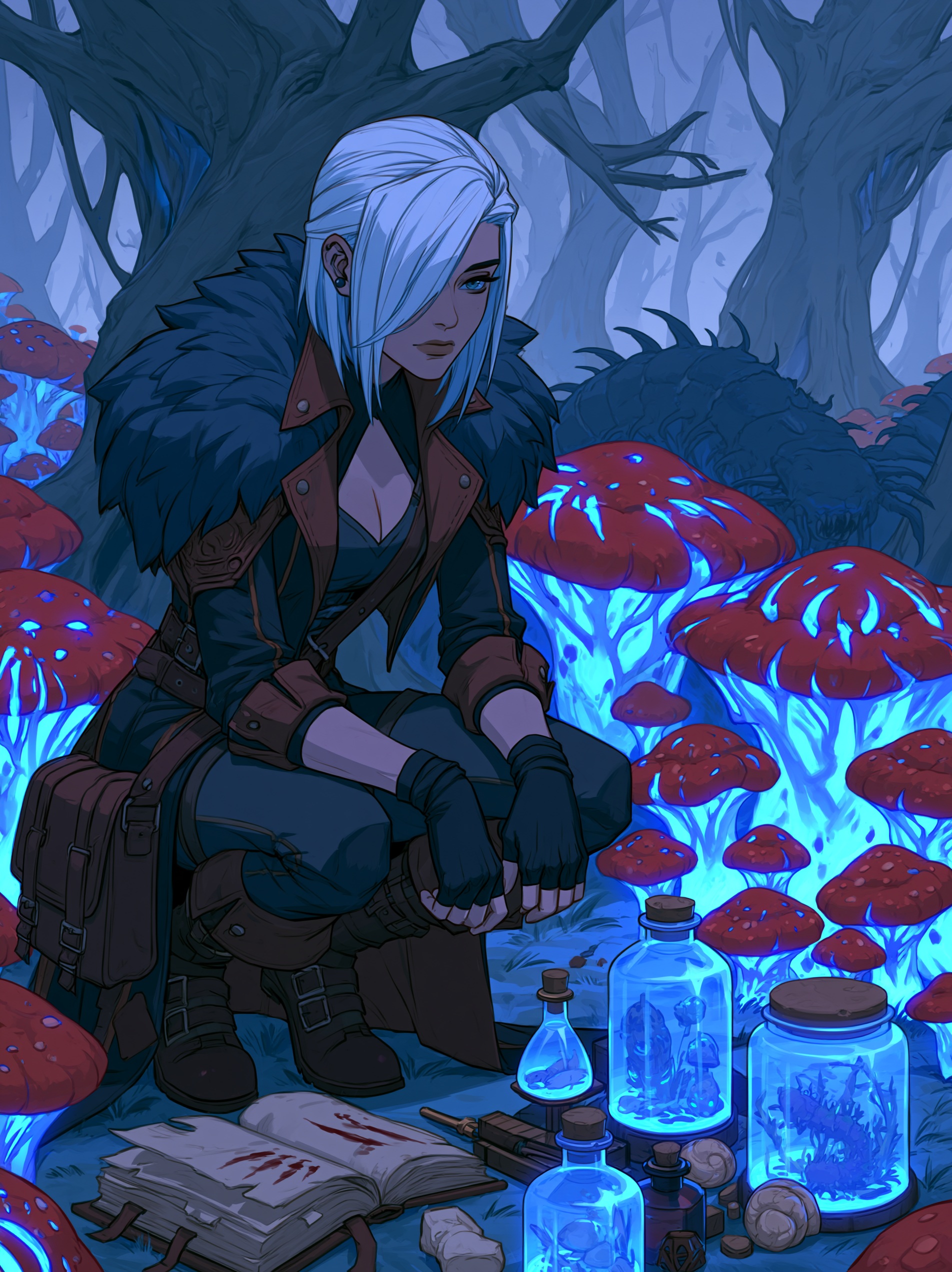
“The forest was healthy. That was the problem. Everything grew too quickly, healed too cleanly, adapted too perfectly. Nature is supposed to struggle a little. When it stops struggling, something is feeding it.”
Type
Research / Scientific



Comments