



Missing Heir

You Were Never Meant To Stay Hidden

“I have a name that may not be real, a birth that was never recorded properly, and three separate parties insisting he both exists and does not. Somewhere in all that is a man I am meant to produce before a judge. I should very much like to know where he is before everyone else decides for me.”
— Barrister Elaris Coland
The Missing Heir is not a revelation. It is a suspicion that refuses to go away.   There is always something just slightly out of place. A name that draws a second look from the right person. A possession that seems too fine, too specific, too meaningful for the life it is attached to. A habit or turn of phrase that feels learned in rooms far grander than the ones you remember. None of it proves anything. Not on its own. But taken together, it begins to form a pattern.   And patterns invite attention.   For most of their life, the heir exists in a kind of quiet contradiction. They are raised somewhere safe or at least somewhere hidden, given just enough to live, but never enough to question too deeply. The past is vague, incomplete, or carefully redirected. If questions are asked, the answers come easily, but never quite fully. It is a life that functions, but never quite fits.   Then something surfaces.   It is rarely dramatic. No grand announcement, no sudden claim laid bare before the world. Instead, it begins with something small and inconvenient. A letter that cannot be opened, or perhaps should not be. A token that draws recognition from someone who should have no reason to notice it. A name spoken in passing that lands a little too heavily to ignore.   From that point forward, things begin to unravel.   People start to notice, though not always in ways that can be confronted directly. A merchant offers a courtesy that was not earned. A guard hesitates instead of demanding answers. A noble looks just a moment too long, as if trying to recall where they have seen you before. The attention is inconsistent, unpredictable, and often unwelcome.   Because not all recognition is kind.   Some see possibility. A missing piece returned, a chance to restore what was lost or to place themselves closer to power by proximity. They offer help, guidance, protection, always with an interest that feels just slightly too sharp to be called generous.   Others see disruption. Old arrangements depend on things remaining as they are. The sudden reappearance of someone who was never meant to return threatens those arrangements in ways that are not easily contained. These are the ones who watch carefully, speak cautiously, and act only when they are certain it is necessary.   And then there are those who see opportunity in a different sense.   To them, the heir is not a person at all. They are a position, something to be used, shaped, or quietly removed depending on what serves best. They may approach with kindness or with force, but the intention is the same. Control the outcome, whatever it may be.   The truth itself does not come easily.   Records are incomplete, altered, or lost entirely. Stories contradict each other. Those who claim to know the past rarely agree on its details, and fewer still are willing to share everything they know. Each answer leads to more questions, and each question carries the risk of drawing the wrong kind of attention.   Even the simplest proof is rarely simple.   A ring, a document, a mark, each carries weight, but none of them stand alone. They must be interpreted, confirmed, and defended. And even then, belief is not guaranteed. In matters of inheritance, truth is only as strong as the people willing to accept it.   This leaves the heir in a constant state of uncertainty.   Every place they go carries the possibility of recognition, whether accurate or mistaken. Every conversation has the potential to turn into something more complicated than it appears. Even silence can be dangerous, as others begin to fill in the gaps with their own assumptions.   There is no clear path forward.   To pursue the truth is to invite scrutiny, rivalry, and expectation. To ignore it is to live with the knowledge that something unfinished follows closely behind. Either choice carries consequence, and neither offers the comfort of certainty.   At the center of it all is a question that refuses to resolve.   Not who you were told you are, but who you might actually be. And more importantly, what that means to everyone else who has been waiting, watching, and preparing for the moment you finally step into a story that was never entirely your own.
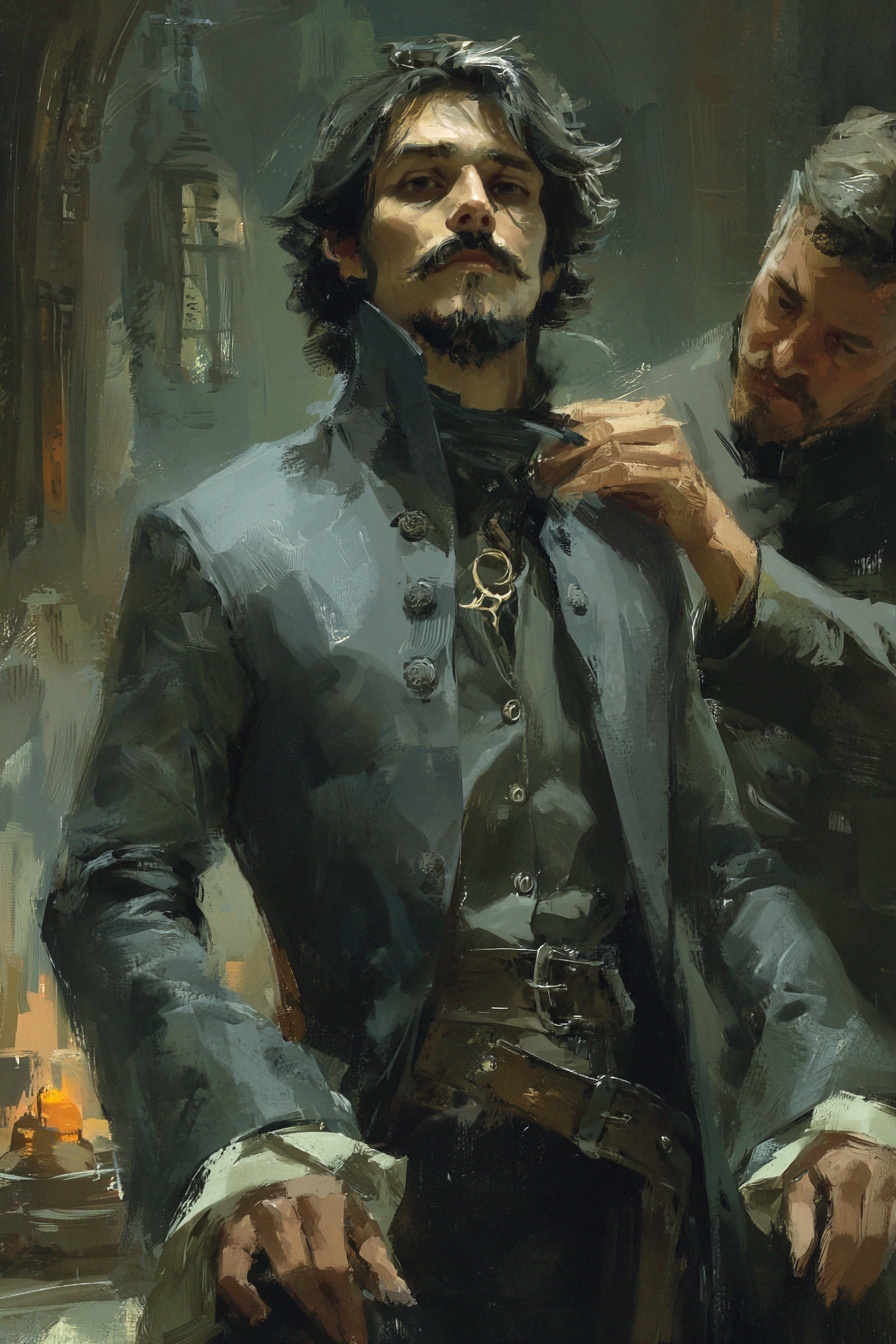
“The difficulty is never in proving a man exists. It is in proving he is the right man, especially when so many others would benefit from him being someone else entirely.”
— The Matter of the Silent Estate, Act I, Scene I


Unknown Shores

Missing Heir


You grew up removed from a legacy you did not fully understand. Whether hidden at birth, displaced by intrigue, or raised far from your true lineage, your past was shaped by absence as much as presence. Something about you sets you apart, though the reasons may be unclear.   Now, signs of your origin have begun to surface. An heirloom, a name, or the attention of powerful individuals hints at a truth long concealed. Some see you as a rightful successor, others as a threat, and many as an opportunity.   Whether you seek to claim your inheritance or avoid it, the forces tied to your lineage are beginning to take notice.


Skill Proficiencies: History, Persuasion
Tool Proficiencies: Choose one: gaming set or musical instrument
Languages: One language associated with your lineage or upbringing
Equipment: A distinctive heirloom tied to your lineage (see the Heirloom table), a sealed letter you have not opened or cannot open, fine but worn clothing, a token of a once-secure upbringing (such as a tutor’s notes, an etiquette guide, or a fragment of a family crest), and a pouch containing 15 gp

Feature: Inheritance Unclaimed

Your existence is known, if not to you, then to others.   In regions connected to your lineage, individuals of status, such as nobles, agents, scholars, or rivals, might recognize you, your name, or your heirloom. Their reaction depends on their allegiance. Some offer aid or protection, while others respond with suspicion, manipulation, or hostility.   Even when you are not recognized, your presence can spark rumors, investigations, or quiet interest among those with something to gain or lose from your return.   The DM determines when and how this recognition manifests. It should complicate your life as often as it provides a benefit. Recognition might be mistaken, incomplete, or inaccurate.  

Defining Twist

Choose or roll on the table below to determine the nature of your inheritance.  
d6Twist
1Hidden for Protection. Loyalists concealed you to protect you from a rival faction.
2Illegitimate Claim. Your right to inherit is disputed, and proving it may be as dangerous as denying it.
3Stolen Identity. Someone else currently claims your inheritance and knows you exist.
4Reluctant Heir. You know, or suspect, the truth and want nothing to do with it.
5Cursed Bloodline. Your inheritance carries a supernatural burden that others fear or seek to exploit.
6Forgotten Lineage. Even those tied to your inheritance have lost the full truth, though fragments remain.
 

Heirloom

Choose or roll on the table below to determine the item tied to your lineage.  
d6Heirloom
1Signet Ring or Crest Seal. Recognizable proof of lineage to those familiar with heraldry.
2Ancestral Blade or Relic. Ceremonial, yet unmistakably tied to your house.
3Fragmented Pendant or Locket. One piece of a larger symbol held by others.
4Encoded Document. A will, map, or contract that requires interpretation.
5Marked Coin or Token. Used by agents of your lineage to identify allies.
6Living Mark. A birthmark, magical brand, or subtle physical trait known only to insiders.
 

Inheritance Type

You can choose to roll on this table or ignore it.  
d6Inheritance
1Noble House. Land, titles, and political influence in a fractured court.
2Arcane Dynasty. A legacy of magic, dangerous knowledge, or forbidden study.
3Merchant Empire. Trade networks, wealth, and economic influence.
4Religious Seat. Authority within a powerful faith or divine institution.
5Criminal Syndicate. Control over an underworld network of spies, thieves, and smugglers.
6Lost Domain. A ruined or forgotten holding that must be reclaimed.
 

Rival Claimant

You can choose to roll on this table or ignore it.  
d6Rival
1The Usurper. Holds your title and refuses to relinquish it.
2The Loyalist. Believes your return will bring ruin and seeks to stop you.
3The Manipulator. Seeks to control you rather than replace you.
4The Hunter. Tasked with finding you and returning you, dead or alive.
5The False Heir. May not know they are an impostor, or may know exactly.
6The Broken Ally. Once sworn to your family, now turned against it.
 

Suggested Characteristics


Personality Traits

d8Trait
1I feel out of place among both commoners and nobility.
2I instinctively mimic manners I do not remember learning.
3I am cautious around anyone who shows unusual interest in me.
4I downplay anything that might draw attention to me.
5I am fascinated by stories of powerful families and lost legacies.
6I test people subtly to see if they recognize me.
7I keep my past vague, even when it would help me.
8I watch how others treat power and remember it.
 

Ideals

d6Ideal
1Legacy. I will decide what my inheritance means.
2Freedom. No title or bloodline will define me.
3Justice. If something was taken from me, it will be reclaimed.
4Truth. I must learn who I am, no matter the cost.
5Power. If I am meant to rule, I will do so well.
6Belonging. I want a place where I fit.
 

Bonds

d6Bond
1Someone risked everything to keep me hidden. I owe them my life.
2There is a place in the world that should have been mine. I need to see it.
3My heirloom is the only proof of who I am.
4Someone knows the truth about my past.
5A rival is searching for me, and I intend to find them first.
6I was given a simple life once. I am not sure I want to lose it.
 

Flaws

d6Flaw
1I underestimate how dangerous power struggles can be.
2I trust anyone who seems to know more about my past than I do.
3I am drawn to status and recognition, even when it puts me at risk.
4I hesitate when forced to make decisions that affect others.
5I hide the truth even from allies who deserve it.
6I believe I am not worthy of what awaits me.


Comments

Please Login in order to comment!
Powered by World Anvil