


Medium
Death Surrounds Us
“The dead do not haunt us because they hate the living. Most remain because something inside them still refuses to accept that the conversation ended.”
Most adventurers fear the dead.
Mediums fear silence.
They are people born with the terrible and intimate awareness that death is not always clean. Spirits linger. Memories cling to places. Voices remain long after the body is buried. Most people pass through life surrounded by unseen remnants they never notice. A Medium does not have that luxury.
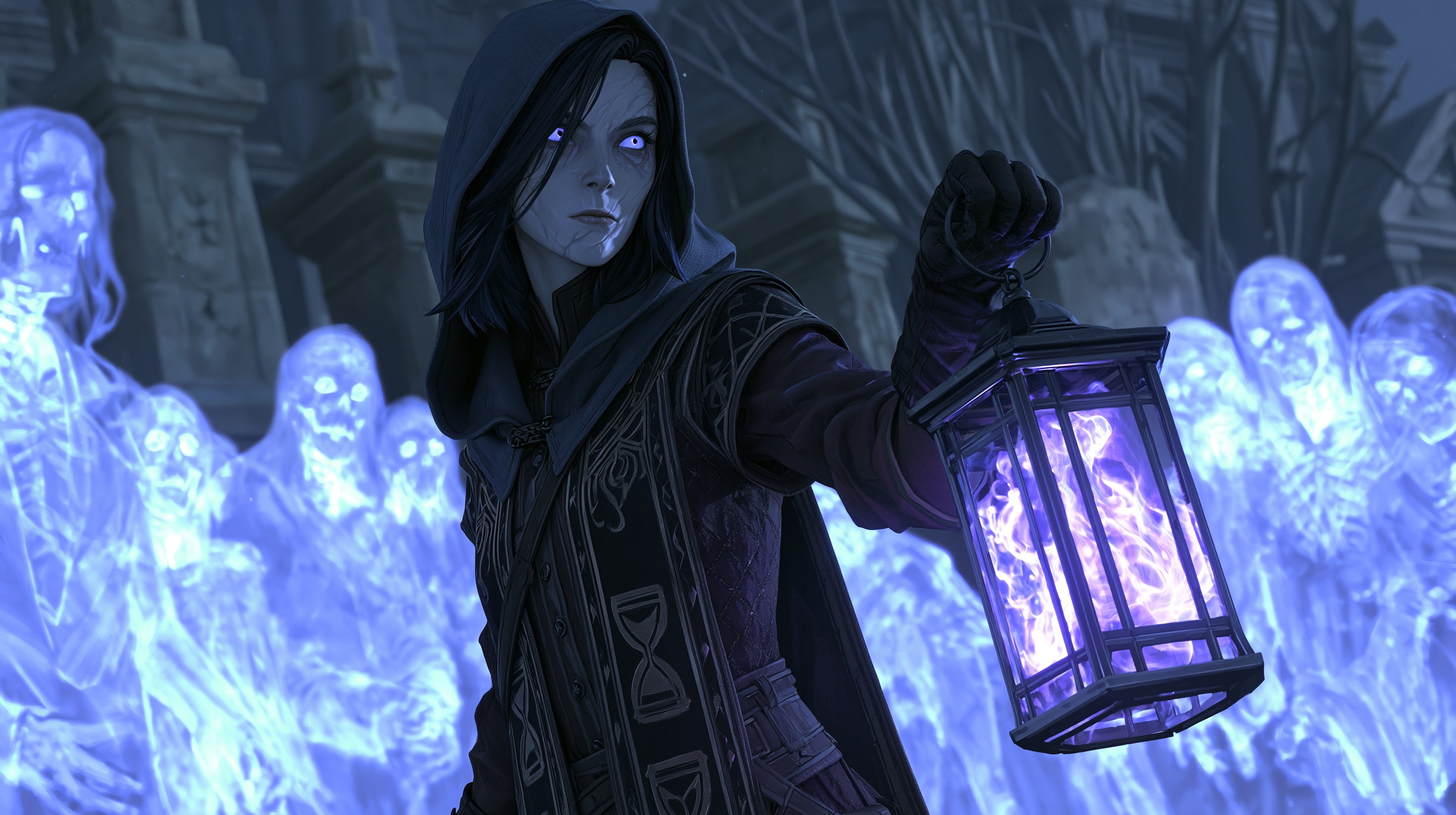
They see the woman still sitting beside the empty fireplace years after the house burned down. They hear soldiers whispering beneath old battlefields while rain falls through their transparent bodies. They pass strangers in crowded streets only to realize one of them has been dead for three days.
To a Medium, the world is never truly empty.
Some are born this way. Others awaken to the gift after surviving near death experiences, terrible tragedies, supernatural encounters, or moments where the boundary between life and death briefly weakened around them. Whatever the cause, the result is usually isolation. Most Mediums spend years doubting their own sanity before realizing the things they see are real.
The spirits themselves vary enormously.
Some are coherent and self aware, fully understanding that they died while remaining trapped by unfinished purpose, grief, guilt, rage, or fear. Others continue fragments of old routines endlessly without comprehension. A ghost may relive the same final conversation every night for decades without recognizing why nobody answers correctly anymore. Some become hostile through confusion rather than malice. Others are heartbreakingly lonely.
A Medium learns quickly that death does not magically create wisdom.
The dead remain people.
This truth shapes the background heavily. Unlike priests who study death philosophically or necromancers who treat souls as magical phenomena, Mediums experience the dead personally and constantly. They become confidants for things no living person can hear anymore. Spirits confess murders. Reveal hidden affairs. Beg for revenge. Ask for burial. Warn of danger. Some merely want their names spoken aloud one final time.
Many Mediums develop exhausted compassion from years spent carrying unfinished grief belonging to strangers.
Others grow detached and emotionally distant simply to survive psychologically.
The living often react poorly to them. Superstitious communities may treat a Medium as blessed, cursed, or dangerously touched by the spirit world. Rural villages sometimes offer them hospitality out of fearful respect, hoping they might calm local hauntings or speak with dead relatives. In larger cities, Mediums are frequently viewed with suspicion, pity, or fascination.
Some become traveling spiritualists, investigators, funeral attendants, occult scholars, or professional ghost speakers. Others avoid civilization entirely because the constant emotional noise becomes unbearable in places saturated by death and memory.
Graveyards tend to feel peaceful to them compared to crowded streets.
A Medium’s relationship with sleep is rarely healthy. Spirits are often drawn to dreams because dreams blur the line between memory, emotion, and reality. Many Mediums suffer recurring nightmares, fragmented sleep, or the sensation of waking conversations continuing long after everyone else in the room has fallen silent.
Experienced Mediums develop rituals to cope.
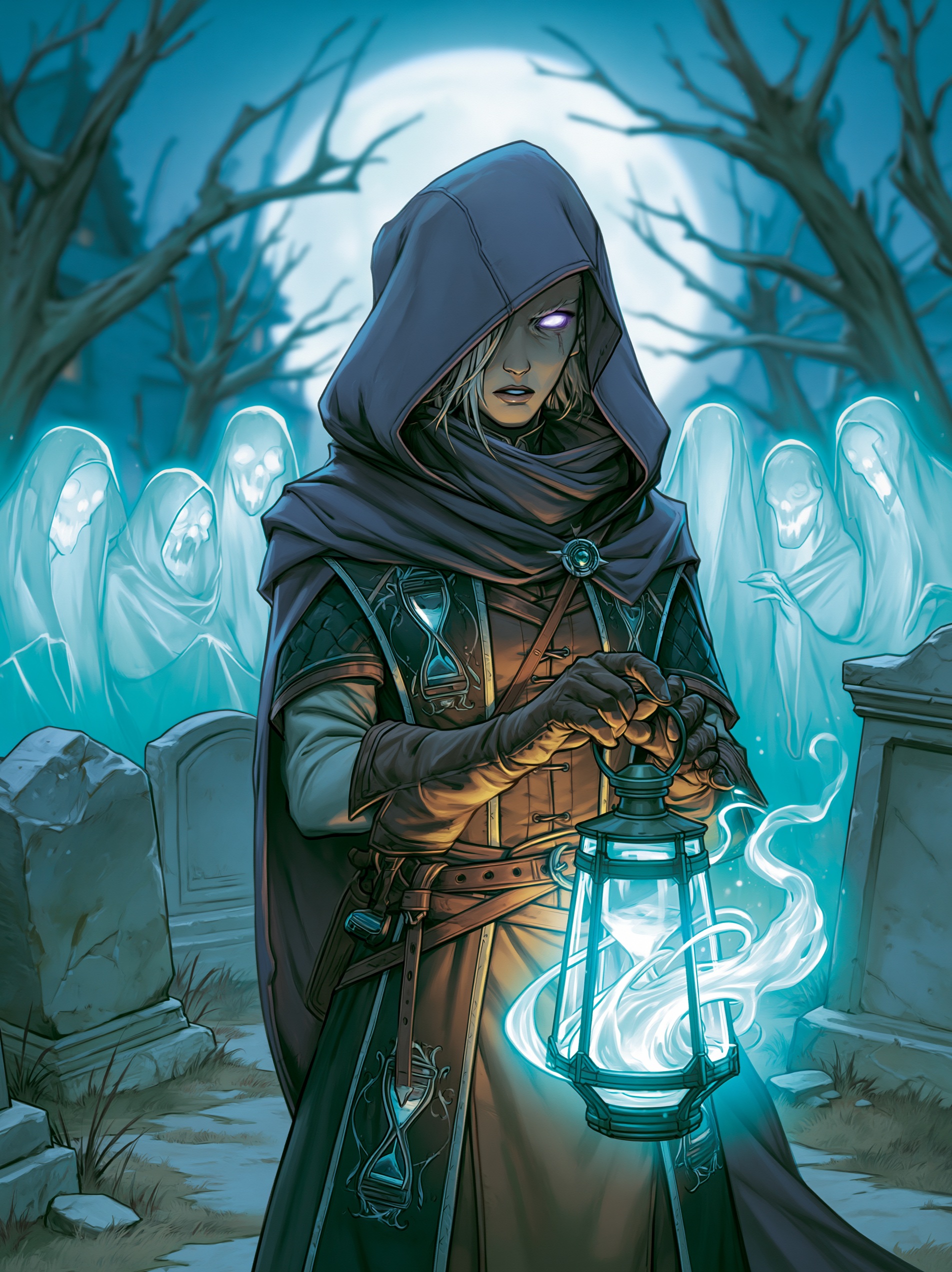
Some leave empty chairs near fireplaces instinctively. Some speak softly so as not to agitate unseen listeners. Some carry charms, incense, bells, or religious symbols not necessarily because these things always work, but because routine creates psychological stability against the endless presence of the dead.
Many keep notebooks.
The dead are terrified of being forgotten.
Names. Dates. Last requests. Hidden graves. Apologies never delivered. Mediums often become unofficial archivists of emotional history, preserving stories nobody else even realizes still exist. Entire family tragedies have been uncovered because a Medium listened patiently to a spirit everyone else dismissed as superstition.
This closeness to death changes their worldview permanently.
Most Mediums lose fear of corpses quickly. The body becomes separate from the person in a very practical sense once you have held conversations beside graves. However, they often develop entirely different fears in exchange. Forgotten places. Silent houses. Mirrors at night. Rooms where spirits should exist but do not.
Because emptiness can be more frightening than haunting.
Adventuring parties value Mediums for obvious reasons. They can uncover truths buried alongside the dead, communicate with lingering spirits, and detect emotional residue tied to violence or supernatural events. A murder mystery becomes far more complicated when one party member can occasionally hear the victim arguing from the corner of the room.
At the same time, traveling with a Medium can become deeply unsettling.
They pause mid conversation because someone invisible entered the room. They answer questions nobody living asked. They stare too long at empty hallways. Sometimes they know things they should not possibly know. Sometimes they wake exhausted after spending the night listening to spirits wander through abandoned ruins.
And sometimes, in the darkest hours before dawn, they speak to someone standing behind another party member.
Someone nobody else can see.
The greatest fear shared among Mediums is simple and universal.
That one day they will fail to notice the moment they themselves joined the dead.
“Don’t answer the voices if they call you by name. The dead learn that first. They stand beside your bed sounding exactly like your mother, your wife, your son, and by the time you realize the thing speaking died fifty years ago, it’s already asking why you can still breathe.”
Type
Arcane



Comments