

Lost In Time

When Am I?

“I walked where yesterday should have been, and found tomorrow already waiting.”
— From “Verses on the Unmoored Hour"
A person lost in time is not simply displaced. They are removed from the structure that made their understanding of the world reliable and placed into one where that structure has shifted, fractured, or been replaced entirely. The world around them appears familiar enough to be trusted at a glance, which is precisely what makes it dangerous.   The first signs are easy to dismiss. A name is wrong. A tradition is performed differently. A place exists, but not as it should. These are the kinds of inconsistencies that can be explained away, adjusted for, or ignored. Over time, those explanations stop working. The differences do not correct themselves. They deepen, spreading into things that should not change and cannot be reconciled with memory.   The problem is not that the individual lacks knowledge. It is that their knowledge no longer belongs to the same version of reality.   Events that should have happened have not. Events that should be impossible have already taken place. Figures who once held power are unknown, or remembered in ways that contradict everything the individual recalls. The past becomes unstable, not in the sense that it is forgotten, but in the sense that it no longer agrees with itself.   This creates a constant and quiet tension.   Memory insists on one version of events. The world presents another. Neither yields. Acting on memory becomes a risk, because it assumes a continuity that no longer exists. Acting on the present requires accepting that what was once certain may now be false. The individual is forced to navigate between these two states without ever fully trusting either.   There are moments when the dissonance becomes impossible to ignore.   A landmark stands where nothing should be. A ruin is intact. A person long dead is alive, or worse, someone who should exist does not. These are not errors that can be dismissed. They are breaks in expectation that force a single, unavoidable conclusion. The world is not what it was, and whatever changed it did not leave a clear explanation behind.   This is where the real strain begins.   Because knowledge, once a source of certainty, becomes something closer to suspicion. Every remembered detail must be questioned. Every assumption must be tested. The individual cannot rely on instinct in the same way, because instinct is built on patterns that no longer hold.   At the same time, that knowledge still has value.   The displaced can see what others cannot. They recognize inconsistencies in records, shifts in tradition, and the subtle presence of things that do not belong. They can identify when something is out of place, even if they cannot always explain why. This makes them useful, but it also isolates them. Insight that cannot be verified is often treated as error.   And sometimes, it is.   Because the final uncertainty is this. There is no guarantee that the memory is correct.   It may reflect a past that has been altered. It may belong to a future that will never occur. It may be drawn from a version of the world that no longer exists, or never existed in the first place. The individual cannot confirm which is true, only that what they remember does not fully align with what they see.   That uncertainty changes how they move through the world.   They observe more than they act. They question more than they assume. They record what they can, not out of habit, but out of necessity, because memory alone is no longer sufficient. Every new piece of information must be compared, measured, and doubted before it can be accepted.   And beneath all of it sits a quieter realization, one that does not announce itself but settles in over time.   It is not just that they are in the wrong time.   It is that the idea of a “right” time may have been an illusion to begin with, a convenient fiction held together by the assumption that events unfold in a way that can be trusted. Remove that assumption, and what remains is something far less stable.   Not chaos.   Something worse.   A world that appears consistent, behaves convincingly, and yet, at its edges, refuses to confirm that it was ever obligated to make sense at all.
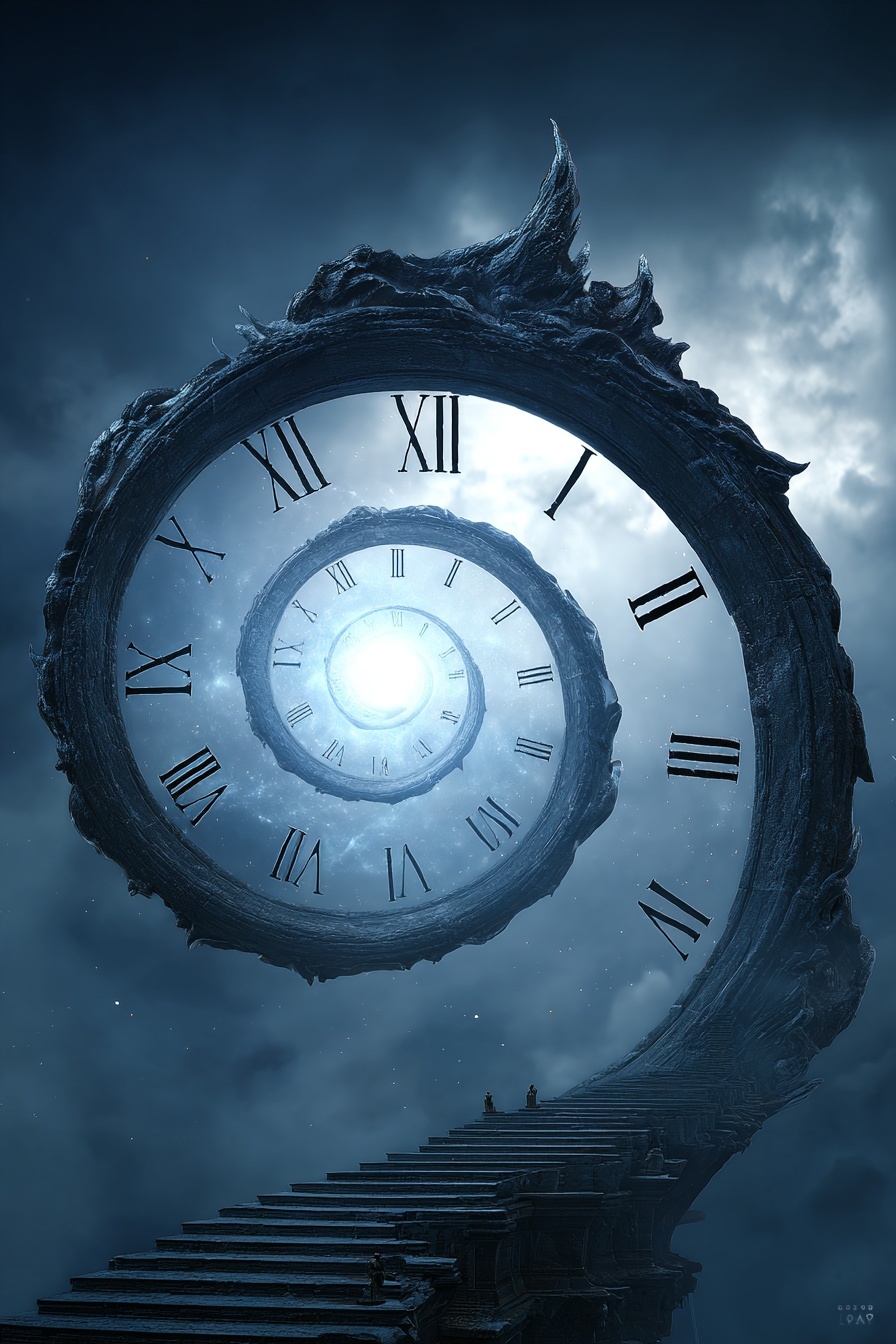
“Time is not a line we travel. It is a structure we assume is stable because we lack the means to see where it bends. When you fall through one of those bends, you do not arrive somewhere else. You arrive where the illusion fails.”
— Entaris Itarr, personal journal


Unknown Shores

Lost in Time


You are not from this time.   Whether cast forward from a forgotten past, pulled backward from a distant future, or displaced by magic, fate, or accident, you have been removed from the era you once knew and placed into one that does not belong to you.   The world around you is familiar, but not the same. Customs are different. Knowledge is incomplete or incorrect. Names you remember are unknown, or remembered differently. Things that should exist do not. Things that should not exist already do.   You carry memories of a time that others cannot verify. Whether those memories are valuable, dangerous, or meaningless depends on how this world has changed.   You cannot return, at least not yet. So you learn, adapt, and endure.


Skill Proficiencies: History, Survival
Tool Proficiencies: Choose one: navigator’s tools or one artisan’s tool
Languages: One of your choice
Equipment: A set of common clothes, an item from your original time (such as a coin, tool, or personal effect), a journal or record of what you remember, a map that is outdated or incomplete, and a pouch containing 10 gp

Feature: Out of Place

Your knowledge does not fully belong to the present time.   In settlements, you can identify inconsistencies in historical records, traditions, or locations based on your memory of how things once were or should be. This allows you to notice missing details, altered accounts, or contradictions others might overlook.   You can also recognize when something is anachronistic, out of place, or influenced by forces that do not align with the expected history of the world.   When you seek information about the past, legends, or lost knowledge, the DM may provide additional context, conflicting details, or alternative perspectives drawn from your displaced understanding.   However, your knowledge is unreliable. When you act on your assumptions about how things should be, the DM may determine that your information is incomplete, outdated, or incorrect, leading to complications or unexpected consequences.   You do not know whether your memories reflect truth, possibility, or something that no longer exists in this world.    

Origin of Displacement

d6Origin
1Magical Mishap. A spell or ritual went wrong.
2Ancient Artifact. You interacted with something beyond your understanding.
3Divine Intervention. A god or powerful entity moved you.
4Planar Distortion. You were caught in a tear or anomaly.
5Experiment. Someone used you as part of a magical or arcane test.
6Unknown. You do not know how it happened.
 

Direction of Displacement

d6Origin Time
1Distant Past. You come from a long-forgotten age.
2Recent Past. You remember events that others have just forgotten.
3Near Future. You know what might soon come to pass.
4Distant Future. The world you knew no longer exists.
5Alternate Timeline. History unfolded differently where you came from.
6Uncertain. You cannot clearly place your origin in time.
 

What You Remember

d6Memory
1A great disaster that has not yet occurred.
2The rise or fall of a powerful figure.
3The location of something thought lost or unknown.
4A version of history that contradicts the present.
5A warning you do not fully understand.
6Fragmented memories that do not form a complete picture.
 

Personality Traits

d8Trait
1I compare everything to how it used to be.
2I am often distracted by small differences in the world.
3I assume I understand things that I actually do not.
4I ask questions others consider obvious.
5I keep careful notes on what has changed.
6I react strongly to places or symbols I recognize.
7I struggle to accept how much has been lost or altered.
8I treat the present as temporary, even when it is not.
 

Ideals

d6Ideal
1Understanding. I must learn how this world came to be.
2Restoration. Things should be as they were.
3Adaptation. The present is what matters now.
4Prevention. I will stop what I know is coming.
5Curiosity. Change reveals truth.
6Acceptance. I cannot change what has already happened.
 

Bonds

d6Bond
1I seek a way to return to my own time.
2Someone I knew should exist here, but I cannot find them.
3I carry knowledge that could change the future.
4I am searching for proof that my memories are real.
5I recognize something in this world that others do not.
6I believe my arrival was not an accident.
 

Flaws

d6Flaw
1I rely too heavily on outdated knowledge.
2I struggle to accept how the world has changed.
3I take risks based on what I think should happen.
4I dismiss others’ understanding of the present.
5I am obsessed with correcting the timeline.
6I feel disconnected from the people around me.


Comments

Please Login in order to comment!
Powered by World Anvil