


Join the adventure! Follow us on social media and GET LOST in Unknown Shores!


Longshoreman

I Coulda Had Class

“The governor claimed he built the city. The merchant claimed he financed it. The admiral claimed he protected it. Then the dockworkers went on strike for three days and everyone learned who was telling the truth.”
— Attributed to Old Brannik, waterfront foreman of Greyport
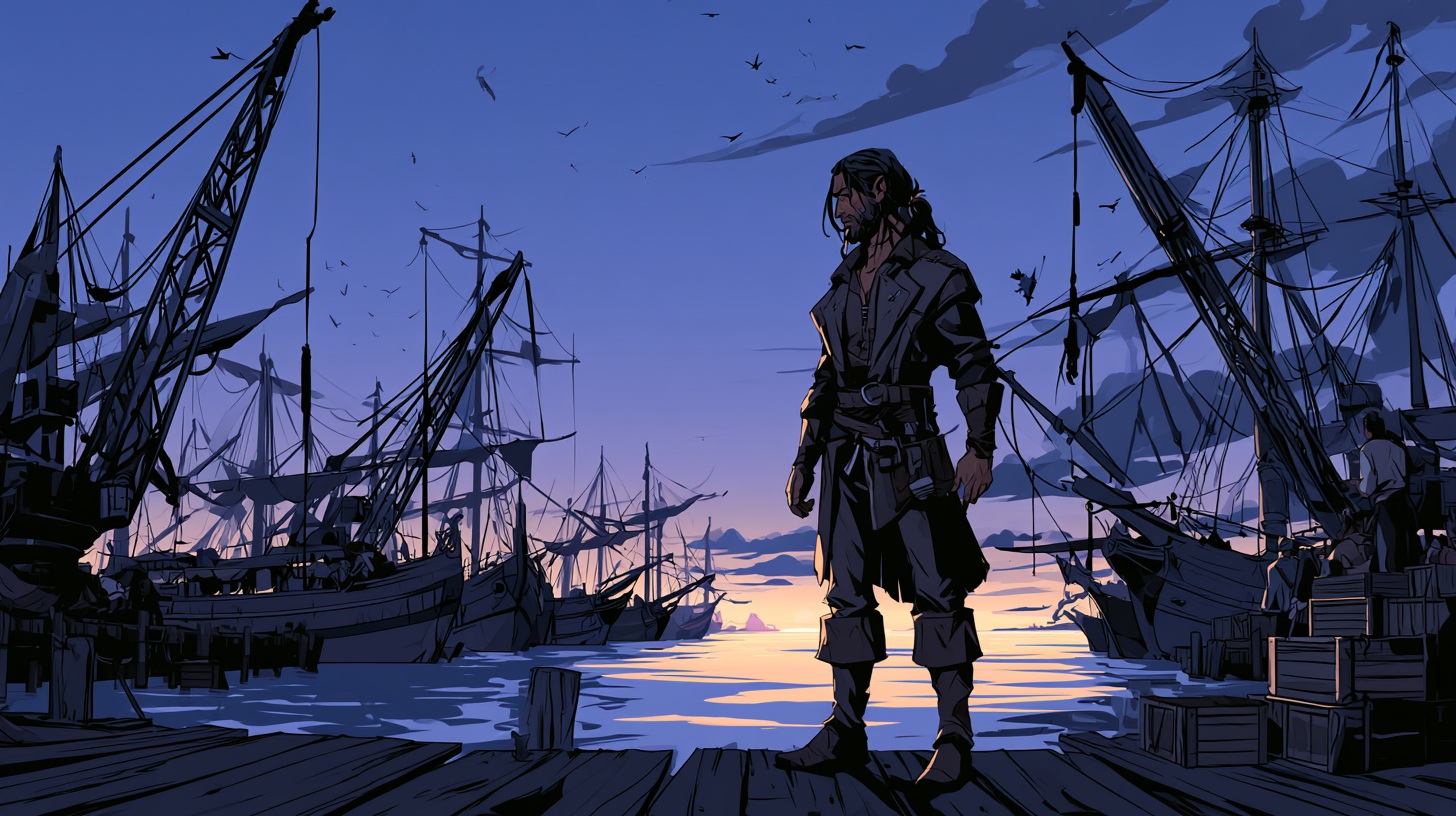
Most people understand that ships bring goods into a city. Far fewer understand what happens afterward.   A vessel can arrive carrying enough grain to feed thousands, enough timber to rebuild entire districts, or enough military supplies to support an army in the field. None of those things matter until someone unloads them, sorts them, records them, stores them, and sends them where they need to go. That work falls to longshoremen.   Longshoremen spend their lives on the waterfront. They load and unload cargo, maintain warehouses, track shipments, coordinate labor crews, move freight, and solve the countless practical problems that arise whenever large quantities of goods pass through a port. The work is physically demanding, frequently dangerous, and often invisible to the people who benefit from it. A city notices when a shipment arrives. It notices when a market is full. It notices when supplies are available. What it rarely notices are the hundreds of workers whose labor made those outcomes possible.   Years spent on the docks provide a perspective on society that few other professions possess. Longshoremen interact with sailors, merchants, laborers, craftsmen, officials, caravan masters, warehouse owners, and travelers from distant lands. They witness commerce at ground level rather than from behind a desk or across a negotiating table. As a result, they often develop a practical understanding of how communities actually function.   They learn which businesses are thriving and which are struggling. They know which merchants pay their workers fairly and which constantly experience labor shortages. They hear rumors from arriving crews, learn of shortages before prices begin to rise, and recognize economic trouble long before local authorities acknowledge it publicly. Information moves through a port almost as reliably as cargo does, and dockworkers are often among the first people to notice changes.   This experience tends to shape a longshoreman's view of authority. Most respect competence wherever they find it, but they are rarely impressed by status alone. A wealthy merchant may own a fleet of vessels, yet a veteran cargo foreman often possesses a far better understanding of how the harbor actually operates. A noble might command the construction of a warehouse, but the laborers who build it know which design decisions will create problems years later. Longshoremen spend their careers watching the difference between people who issue instructions and people who make those instructions reality.   For that reason, many longshoremen place tremendous value on practical knowledge. Experience matters. Reliability matters. Competence matters. The person who consistently solves problems earns more respect than the person who merely claims authority over them.   In lands scarred by the Shattering, longshoremen have become even more important. Trade routes have shifted, ports have risen and fallen, and entire regions depend upon maritime commerce to maintain contact with the outside world. A disrupted harbor can create shortages hundreds of miles inland. A successful port can transform a struggling settlement into a prosperous city. Longshoremen witness these changes firsthand because they stand at the point where distant events become local realities.   Many become keen observers of the hidden connections that sustain civilization. They understand that prosperity depends upon transportation, labor, infrastructure, and cooperation. They know that shortages rarely appear without warning and that crises often begin long before the public becomes aware of them. Most importantly, they understand that nearly everything people depend upon exists because someone, somewhere, performed difficult work that rarely receives recognition.   A longshoreman may not know who sits upon a throne. They may not care.   What they know is who unloads the grain, repairs the cranes, maintains the warehouses, drives the wagons, balances the manifests, and keeps the harbor functioning when everything goes wrong.   Most people ask who is in charge.   A longshoreman asks who is doing the work.
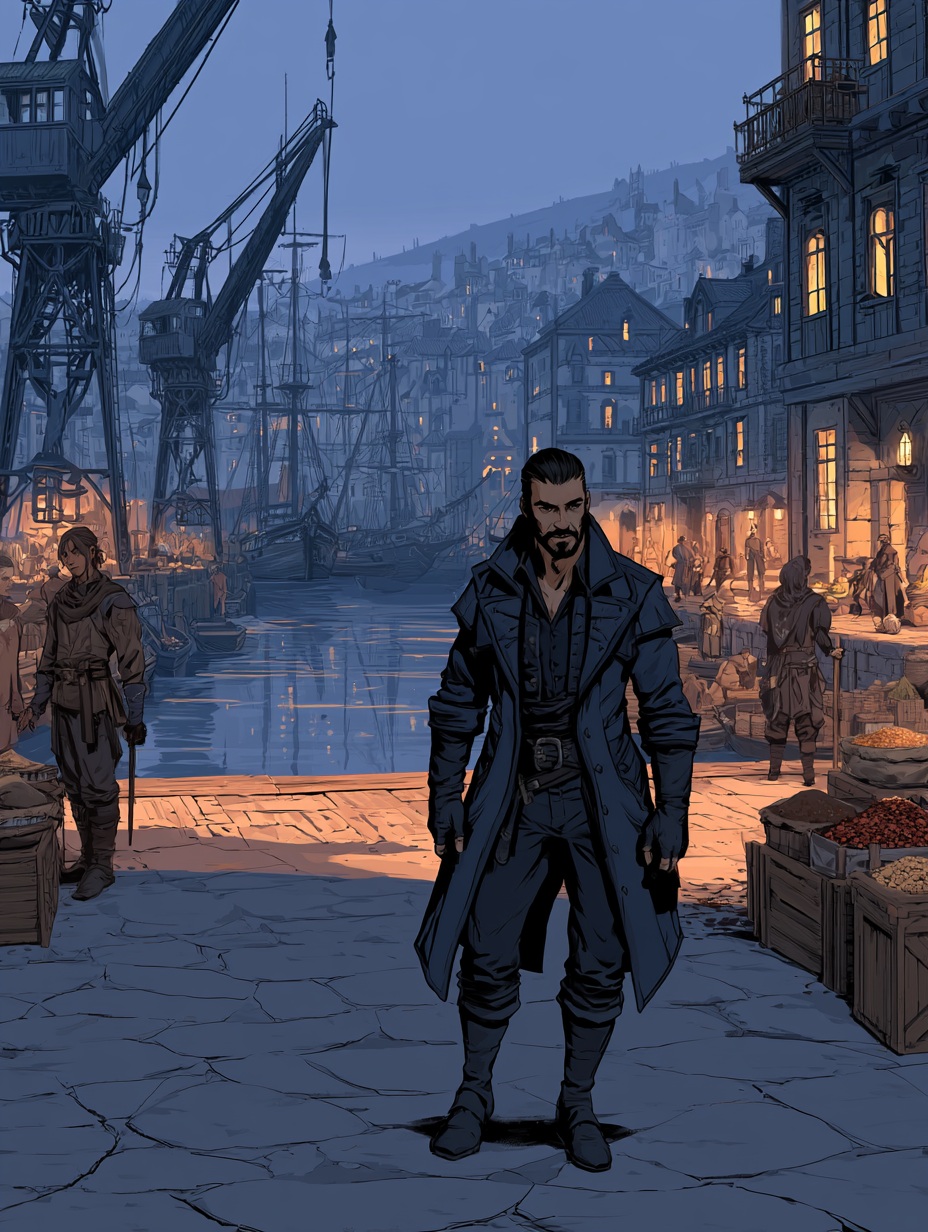
“A nobleman sees ships. A merchant sees cargo. A longshoreman sees six broken crates, a leaking barrel, two missing laborers, a crane that won't survive the week, and the exact reason the entire operation is already behind schedule.”
— From Observations of the Lower Docks by Hester Vale
Type
Transportation

Longshoreman

Overview:
Most people ask who is in charge. You ask who is doing the work.   For years, you worked the waterfront, loading cargo, unloading ships, balancing manifests, hauling freight, and solving the endless practical problems that arise whenever goods need to move from one place to another. The work was rarely glamorous. It was often exhausting. It was always necessary. Captains received the praise. Harbor masters issued the orders. Merchants collected the profits.   But ships never unload themselves. Neither do wagons, warehouses, markets, fortresses, or cities.   Years spent on the docks taught you to pay attention to the people whose labor keeps everything else functioning. Sailors, laborers, clerks, carpenters, stevedores, teamsters, warehouse workers, cooks, and countless others all perform tasks that most people never notice until they stop being done.   You learned something else as well. The people performing essential work often know far more than others realize. They know which roads see the most traffic. Which businesses are thriving. Which warehouses are struggling. Which officials create problems. Which merchants pay fairly. Which shortages are becoming serious. Which plans are likely to fail.   They know because they are the ones making things happen. Years spent among working people taught you something important. Every community depends upon countless individuals whose names most people never learn. Most people ask who is in charge.   You find yourself wondering who is doing the actual work.
Skill Proficiencies: Insight, Investigation
Tool Proficiencies: Choose one: Carpenter's Tools, Mason's Tools, or Vehicles (Water)
Languages: One of your choice
Equipment:
A dockworker's hook or similar work tool, a token from a labor guild or waterfront tavern, a notebook containing observations about ports, businesses, and local operations, a set of work clothes, and a pouch containing 10 gp.
Features:

Feature: Working Knowledge

Years spent working alongside laborers, tradespeople, sailors, clerks, craftsmen, and other working professionals have taught you how communities function behind the scenes.
Suggested Characteristics: Longshoremen spend their lives among workers, travelers, merchants, and tradespeople. Most develop practical instincts, an appreciation for competence, and a healthy respect for the people who keep communities functioning.

What Kind of Work Did You Do?

d8Work
1Loading and unloading merchant vessels.
2Managing manifests and cargo records.
3Coordinating warehouse operations.
4Moving military supplies and equipment.
5Handling valuable or fragile cargo.
6Supervising teams of laborers.
7Repairing ships, docks, or harbor facilities.
8Taking whatever work the waterfront could offer.

What Did the Docks Teach You?

d6Lesson
1Nothing important happens without someone's labor.
2The people doing the work usually understand the problem best.
3Communities are stronger than the individuals who lead them.
4A job done well is often invisible.
5Respect is earned through effort, not titles.
6When something stops working, start by asking who depended on it.
Personality Trait:
d8Trait
1I pay close attention to who is actually doing the work.
2I trust competence more than status.
3I enjoy talking with ordinary people about their trades and professions.
4I remain calm when plans go wrong and practical problems arise.
5I instinctively notice inefficiency and wasted effort.
6I value experience more than theory.
7I believe every job deserves respect if it helps people survive.
8I enjoy learning how unfamiliar communities sustain themselves.
Ideal:
d6Ideal
1Reliability. People should be able to depend on one another. (Lawful)
2Respect. Honest work deserves recognition regardless of status. (Good)
3Practicality. Problems are solved through action, not promises. (Any)
4Opportunity. Hard work should create opportunities for a better life. (Any)
5Solidarity. People accomplish more when they help one another. (Good)
6Independence. I prefer earning my way through skill and effort. (Chaotic)
Bond:
d6Bond
1A waterfront district will always feel like home to me.
2The people I once worked beside remain like family.
3A foreman, captain, or tradesperson taught me lessons I still live by.
4I know the truth about a disaster that powerful people blamed on the wrong individuals.
5Someone who performs essential work is not receiving the recognition they deserve, and I intend to change that.
6I owe my life to workers who helped me when nobody else would.
Flaw:
d6Flaw
1I sometimes dismiss people who lack practical experience.
2I am skeptical of authority figures who have never done the work themselves.
3I can be stubborn when I believe a practical solution is being ignored.
4I often assume competence matters more than politics.
5I struggle to understand people who value appearances over results.
6I have difficulty remaining neutral when working people are being exploited.

Comments

Please Login in order to comment!
Powered by World Anvil