


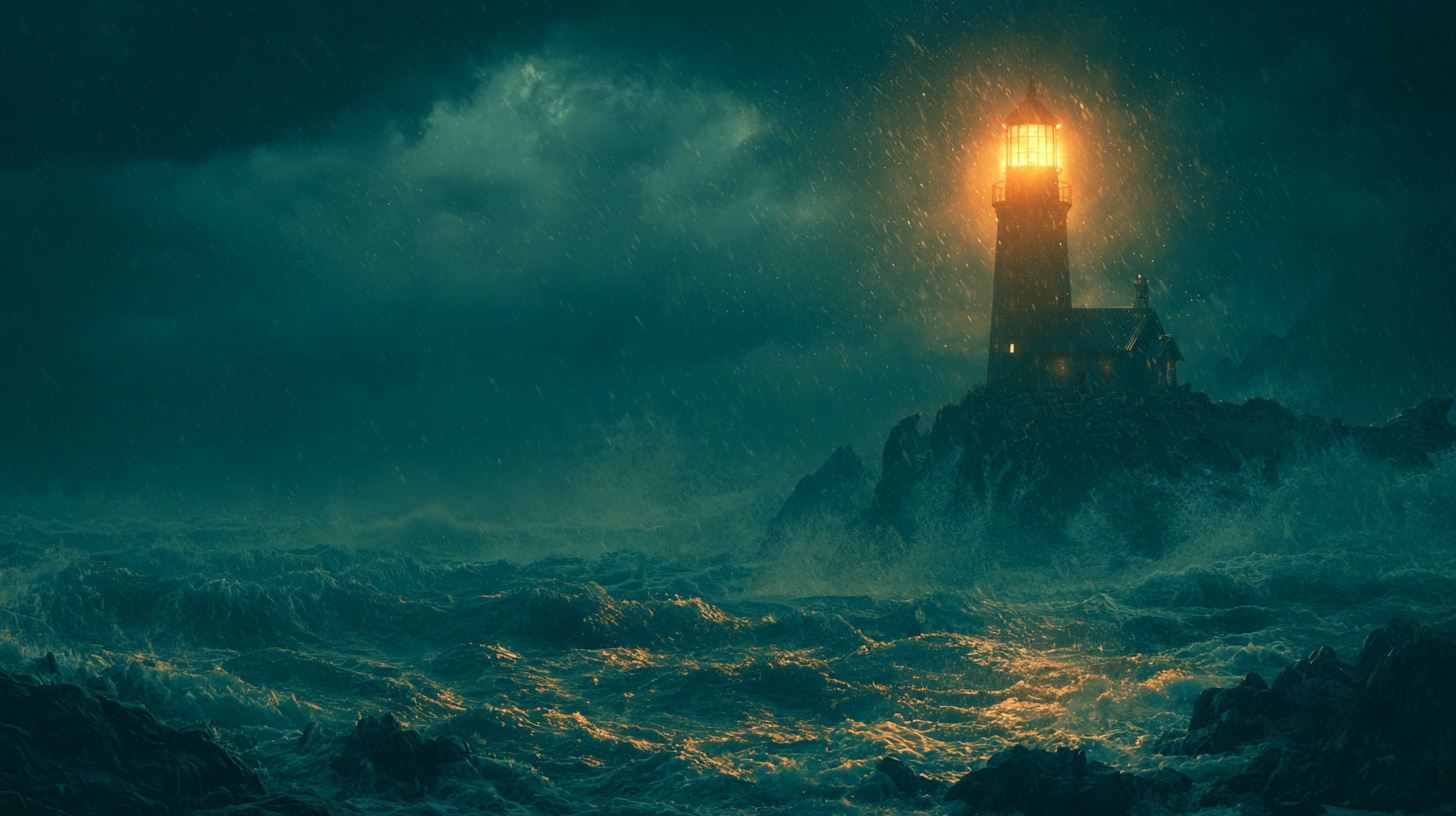
Lighthouse Keeper
A Lonely Life
"The purpose of a lighthouse is not to command the sea. It is to remind sailors that someone is still watching from shore."
Lighthouses exist because the sea is unforgiving.
Every coastline possesses dangers invisible to unfamiliar sailors. Reefs lurk beneath the surface. Sandbars shift with tides and storms. Cliffs emerge suddenly from fog. Narrow channels become deadly when approached from the wrong angle. For as long as people have traveled by water, coastal communities have sought ways to guide ships safely through these hazards.
The lighthouse became one of the most successful solutions ever devised.
Its purpose is deceptively simple. A light visible from great distances provides sailors with a fixed point of reference in a world where visibility, weather, and geography constantly change. The beacon marks safe passages, warns of danger, identifies harbors, and helps vessels determine their position when other landmarks disappear into darkness or fog.
The existence of the lighthouse created a profession unlike almost any other.
Lighthouse keepers occupy a curious place within maritime society. They are neither sailors nor harbor officials, yet both groups depend upon them. They rarely travel, yet they possess intimate knowledge of the sea. They often spend long periods in isolation while simultaneously serving as essential members of larger coastal communities.
Their responsibility is straightforward in theory and relentless in practice.
The light must remain visible.
Everything else is secondary.
A keeper's duties extend far beyond simply lighting a beacon each evening. Lamps require maintenance. Lenses require cleaning. Structures require repair. Fuel must be acquired and stored. Records must be maintained. Weather conditions must be monitored. Signals must be observed. Every aspect of the lighthouse demands constant attention because even minor failures can have serious consequences.
As a result, the profession attracts individuals capable of extraordinary patience and discipline.
Much of a keeper's life revolves around observation. Hours are spent watching the sea, studying weather patterns, monitoring visibility, recording unusual activity, and maintaining awareness of local conditions. Over time, experienced keepers become remarkable observers. Many can predict approaching storms long before others recognize the warning signs. They learn to interpret cloud formations, wave patterns, shifting winds, animal behavior, and countless other subtle indicators.
Coastal communities frequently come to rely upon this expertise.
Fishermen seek advice before launching their vessels. Harbor officials consult keepers regarding dangerous conditions. Merchants value accurate weather predictions. Even experienced captains often respect the judgment of those who spend their lives watching a particular stretch of coastline.
The profession also produces a distinctive understanding of risk.
Unlike sailors, lighthouse keepers rarely confront danger by venturing into it. Their role is to recognize danger before it becomes unavoidable. They study storms, shipwrecks, currents, fog banks, and coastal hazards not because they seek excitement but because understanding these threats allows others to avoid them.
This perspective often creates individuals who value vigilance over bravado and preparation over confidence.
Throughout history, lighthouse keepers have earned considerable respect within maritime cultures. Entire communities may owe their prosperity to safe harbors maintained by reliable beacons. Trade flourishes when ships can navigate coastlines safely. Fishing fleets expand when dangerous passages become manageable. Ports grow when mariners trust local waters.
Many sailors never meet the people responsible for these benefits.
The light itself becomes the keeper's public face.
This anonymity contributes to the profession's reputation. Lighthouse keepers are often viewed as steady, dependable figures whose work speaks for itself. Their success is measured not through fame or recognition but through the absence of disaster. A functioning lighthouse rarely attracts attention. A failed one becomes impossible to ignore.
The profession's long association with isolation has also produced countless stories and legends. Coastal folklore is filled with tales of lonely towers, mysterious lights, ghost ships, strange weather, and keepers who witnessed extraordinary events while standing watch over remote shorelines. Some stories are undoubtedly fiction. Others may contain more truth than their listeners realize.
Regardless of the legends, the reality of the profession remains impressive enough.
Lighthouse keepers serve as guardians of coastlines, observers of weather, custodians of navigation, and protectors of lives they will never personally know. Their work rarely receives public celebration, yet entire maritime communities depend upon it.
The profession endures because its purpose remains timeless.
The sea is vast.
The coast is dangerous.
Someone must keep the light burning.
"Storms do not frighten experienced keepers. Silence does. Storms announce themselves. The things worth fearing often arrive quietly."
Type
Transportation



Comments