


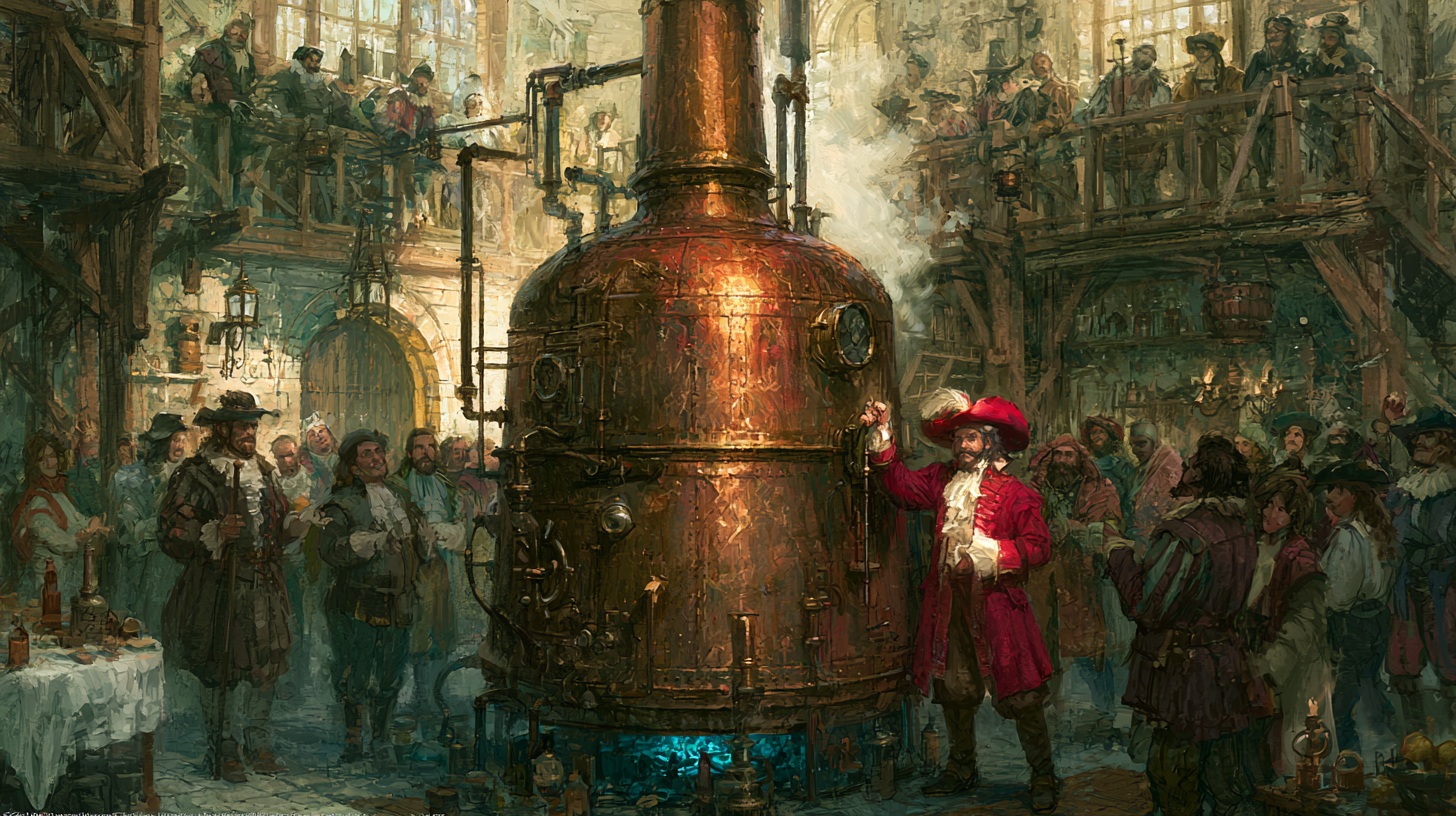
Inventor
I Have An Idea
“People keep telling me to stop reinventing the wheel. Those people have clearly never seen a wheel with six avoidable design flaws.”
Most people learn how the world works.
Inventors spend their lives wondering why it works that way.
The distinction seems small at first. A wheel turns. A lock closes. A bridge stands. A furnace produces heat. Most people accept these things and move on with their lives. The Inventor cannot. Somewhere between understanding a thing and accepting it, a question emerges.
Could it work better?
That question has launched more discoveries, disasters, fortunes, and catastrophes than perhaps any other in history.
The Inventor occupies a curious place in society. Every civilization depends upon innovation, yet few are entirely comfortable with the people responsible for it. Inventors challenge assumptions. They question traditions. They dismantle devices that function perfectly well simply to understand whether they might function better. To practical minds, this behavior appears reckless. To the Inventor, it appears necessary.
After all, every useful invention was once an unnecessary experiment.
The profession attracts individuals with unusual relationships to failure. Most people dislike being wrong. Inventors expect it. A failed design, a collapsed prototype, a cracked component, a flawed formula, or a broken mechanism rarely signals defeat. It simply provides information. Every mistake eliminates one possibility and reveals another. Progress often depends upon surviving enough failures to recognize the correct solution when it finally appears.
This outlook can be difficult for others to understand.
An Inventor examining a ruined prototype may appear disappointed. In reality, they are often delighted. Something unexpected occurred. A mystery has emerged. A problem exists that did not exist yesterday. Such developments are invitations rather than obstacles. The world has revealed a question that did not previously have an answer.
Questions are irresistible to people of this temperament.
Most Inventors begin with curiosity. They dismantle tools to see what is inside. They ask uncomfortable questions. They experiment with materials, techniques, and designs that more cautious individuals avoid. Some receive formal training through guilds, academies, workshops, or universities. Others are entirely self taught. Regardless of origin, they share the same tendency.
They refuse to leave things alone.
This habit often places them at the forefront of discovery. New methods of construction, navigation, agriculture, transportation, manufacturing, medicine, communication, and countless other fields have emerged because someone looked at an accepted solution and decided it was not good enough. Progress depends upon dissatisfaction, and Inventors possess it in abundance.
Yet invention is rarely a purely technical pursuit.
The greatest challenge is often convincing other people. A superior design is worthless if nobody adopts it. A revolutionary idea remains theoretical until someone funds it, builds it, purchases it, or believes in it. Many Inventors discover that persuasion is every bit as important as engineering. History contains countless examples of brilliant ideas dismissed because they arrived before society was ready to accept them.
The profession therefore produces equal measures of genius and stubbornness.
Some Inventors become celebrated visionaries. Others become infamous eccentrics. A surprising number occupy both categories simultaneously. Society tends to praise successful innovation and mock unsuccessful innovation, often without recognizing how difficult it is to distinguish between them in advance.
The work also encourages a unique perspective on history. Inventors understand that every tool, machine, structure, and process represents the accumulated labor of countless predecessors. No invention emerges from nothing. Every breakthrough builds upon earlier discoveries. This awareness often creates deep appreciation for forgotten craftsmen, scholars, engineers, and experimenters whose contributions made later achievements possible.
In lands shaped by catastrophe, lost knowledge becomes especially significant.
Entire techniques disappear. Materials become scarce. Ancient devices survive without explanation. Ruins contain mechanisms nobody fully understands. To an Inventor, such mysteries are irresistible. An impossible machine hidden within forgotten ruins may represent a challenge, a warning, or an opportunity. Most hope it is the third.
Not all inventions improve the world.
Inventors know this better than anyone. New technologies solve problems while creating others. Powerful tools can be misused. Efficient processes can be exploited. A design intended to help people may eventually harm them. The profession therefore carries a burden often ignored by outsiders. Creation brings responsibility.
Some accept this responsibility eagerly.
Others spend their lives trying to avoid thinking about it.
Regardless, the work continues. Somewhere an Inventor is sketching ideas that may never function. Somewhere another is testing a prototype that may explode. Somewhere a third is staring at a problem nobody else has noticed and becoming increasingly convinced that the solution is just one experiment away.
Most of those efforts will fail.
A few will change everything.
The Inventor understands that this is an acceptable ratio.
After all, every great advancement begins as a ridiculous idea that has not failed yet.
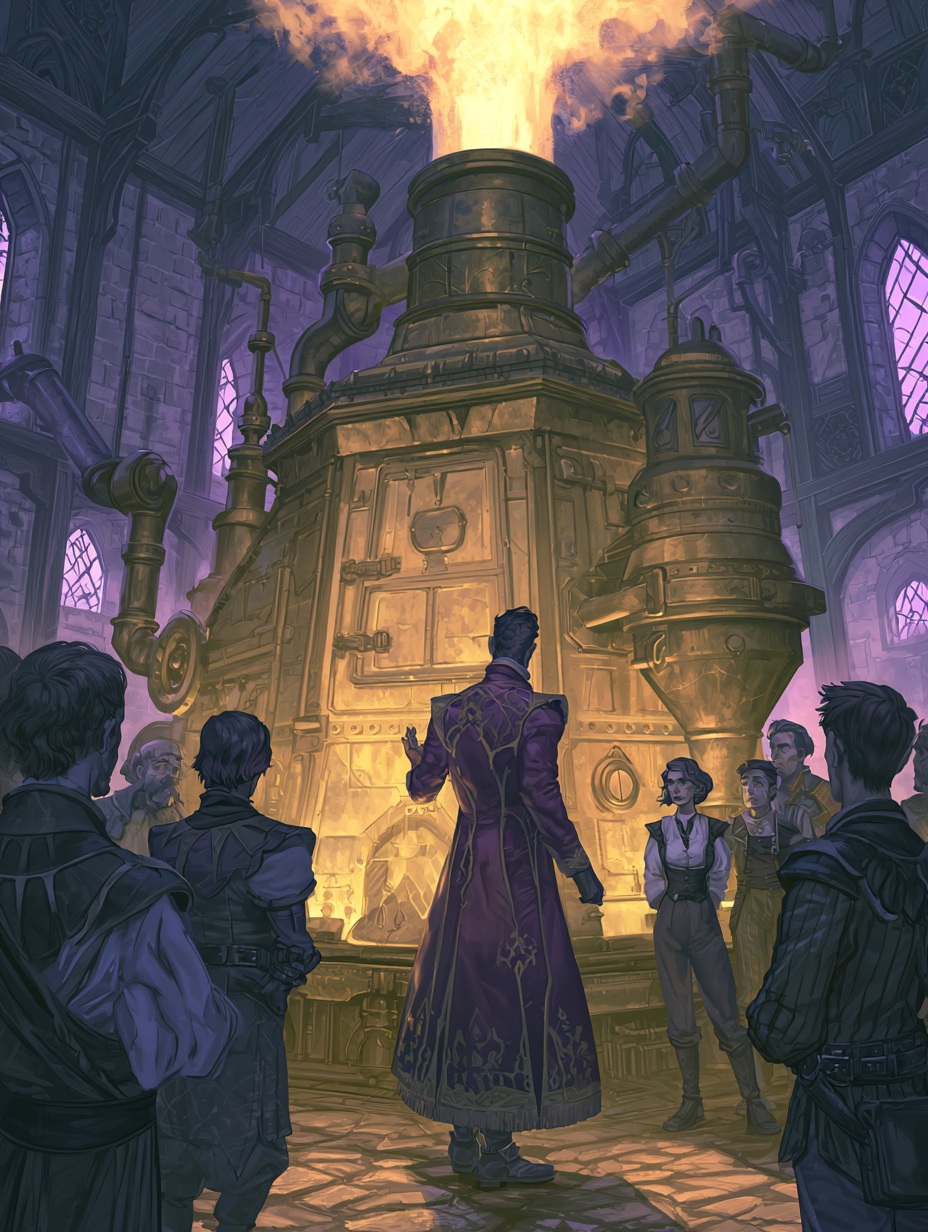
“My first prototype exploded, caught fire, and launched itself through the workshop window. My second prototype only exploded. That's what we in the profession call progress.”
Type
Research / Scientific



Comments