


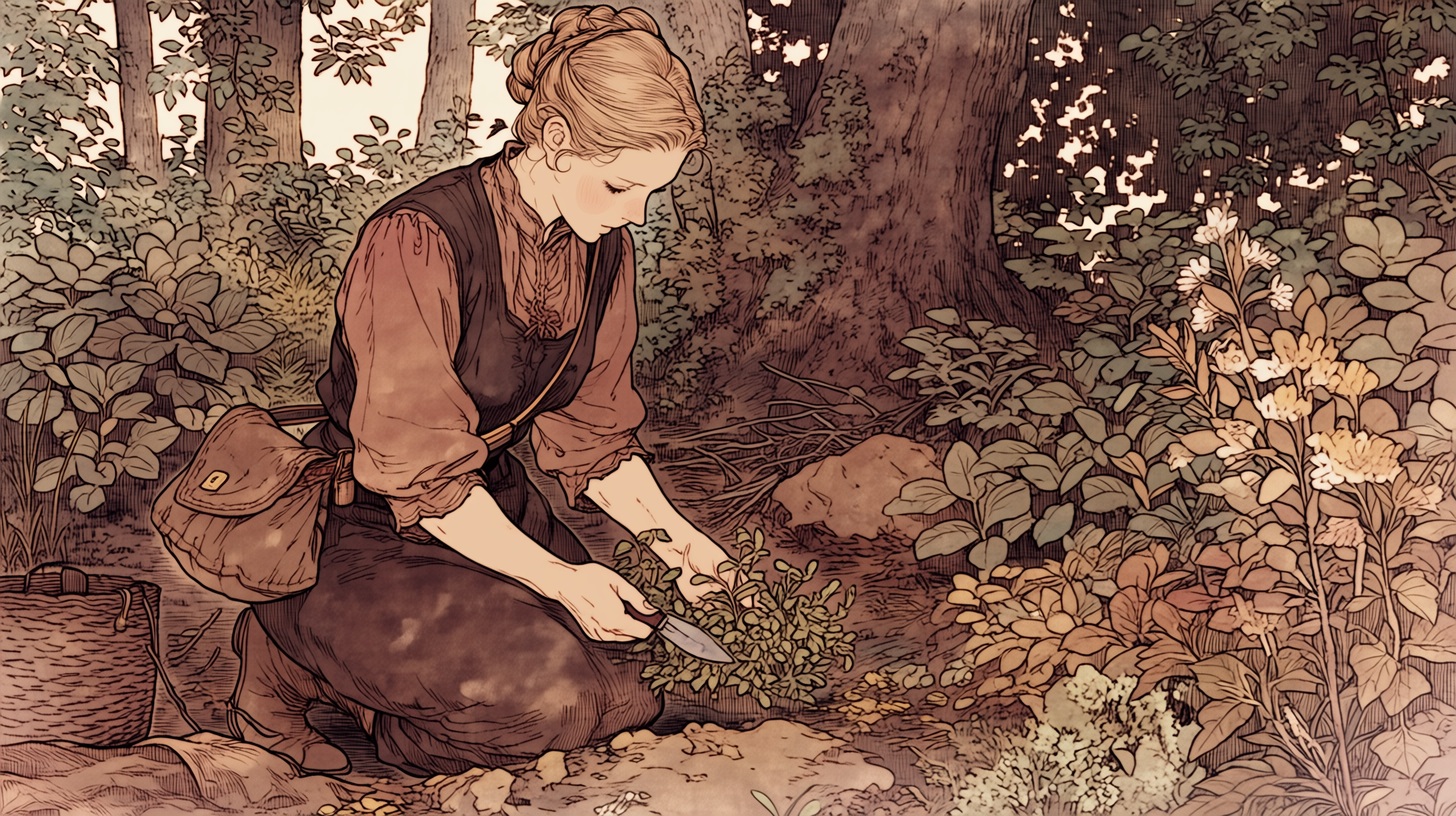
Hedgebotherer
Let's Go For A Walk!
“You call it a weed. I call it three different uses and one very good reason not to touch it barehanded.”
A hedgebotherer is not formally trained in the way scholars prefer to describe knowledge. There is no neat catalog, no orderly lecture, and no clean distinction between useful and dangerous. Instead, there is experience, repetition, and the kind of attention that comes from spending too much time in places where everything growing out of the ground matters more than it looks.
It starts with curiosity.
Someone notices that plants are not as simple as they seem. That two things growing side by side can have entirely different effects. That one leaf can feed you while another, nearly identical, can make you regret ever learning the difference. From there, curiosity turns into habit, and habit turns into something closer to instinct.
A hedgebotherer does not just look at plants.
They recognize them.
Not in the broad sense, but in the details that matter. The shape of a leaf, the color shift along a stem, the smell released when something is crushed between fingers. These are not small things. They are the difference between something useful and something that will put you on the ground wondering where you went wrong.
This knowledge does not stay theoretical for long.
It gets used. Constantly.
Food is the simplest application. In the right environment, there is almost always something that can be eaten if you know where to look and what to avoid. A hedgebotherer does not need prepared supplies to get by for long. They can find enough to keep themselves and others moving, even if it is not particularly satisfying.
Beyond that, plants become tools.
Fibers can be stripped and repurposed. Resins can substitute for materials that would otherwise need to be purchased. Certain growths can stand in for components that others would have to carry with them. None of it is elegant, but it works, and it means less reliance on whatever happens to be available at the time.
Then there are the less pleasant uses.
Some plants heal. Some help. Others do the opposite, and a hedgebotherer knows those just as well. Identifying what is safe and what is not becomes second nature, whether the goal is to avoid harm or, when necessary, make use of it. This is not cruelty. It is familiarity with the fact that nature does not distinguish between helpful and harmful. It simply provides both.
Time spent working with plants changes how a person moves through the world.
Terrain stops being background and starts becoming information. A forest is not just trees, it is a collection of specific growths that indicate water, soil quality, and what might be found nearby. A swamp is not just difficult ground, it is a place where certain things thrive and others fail. Even open land has patterns, and those patterns can be followed or avoided depending on what you are trying to accomplish.
A hedgebotherer learns to navigate by these signs.
Not by landmarks alone, but by the presence or absence of growth that should be there. If something is missing, that matters. If something unusual appears, that matters more. Over time, this awareness makes it much harder to become lost in a place that follows its own natural rules.
Of course, there is a reason the term is used the way it is.
People who spend this much time focused on plants tend to develop a reputation. They stop noticing that they are talking about things others do not care about. They point out useful roots in the middle of unrelated conversations. They correct assumptions about what is safe to eat with a level of urgency that suggests past experience.
They also tend to wander off slightly.
Not far, not enough to cause real concern, but enough that they are occasionally found examining something that no one else even noticed was there. It is not distraction so much as priority. If something looks interesting, it probably is, and ignoring it feels like a mistake.
This does not make them impractical.
It makes them consistent.
A hedgebotherer does not overlook resources simply because they are inconvenient. They do not ignore danger because it looks ordinary. They treat the natural world as something worth paying attention to at all times, because sooner or later, it proves that attention was justified.
Most people only notice plants when they need something from them.
A hedgebotherer notices them whether they need them or not.
That is usually the difference between guessing and knowing.

“If you don’t know the plant, don’t touch it. If you do know the plant, still don’t be careless. That’s how people end up stories instead of survivors."



Comments