


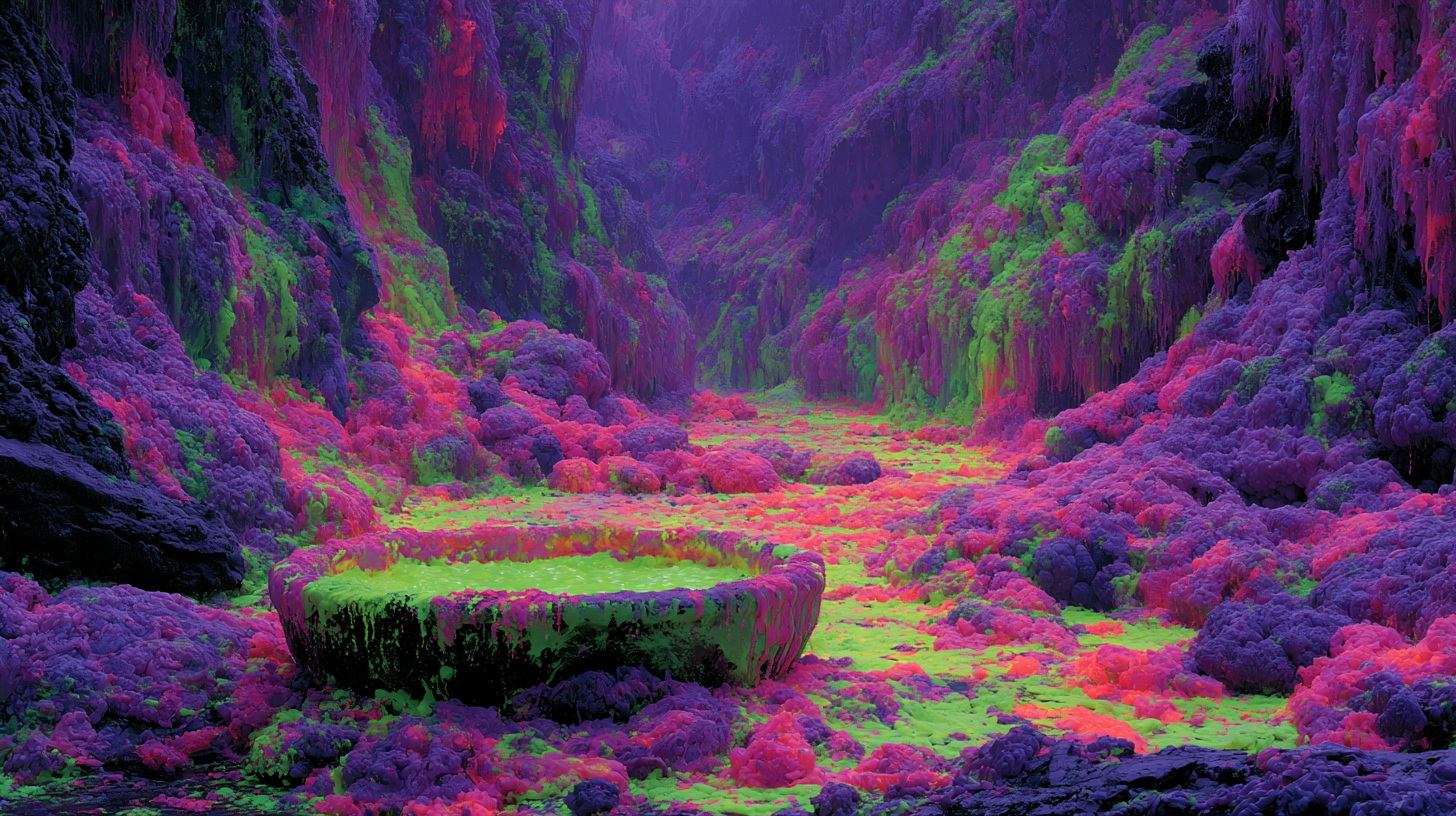
Glowpaint
Highlights In the Dark
"The greatest magical invention of the age was not the one that impressed kings. It was the one ordinary people quietly adopted and never stopped using."
The invention of Glowpaint solved a surprisingly common problem.
People needed light.
They simply did not always need it immediately.
Traditional lanterns require fuel. Torches burn out. Continual flame enchantments are expensive. Even the most reliable light source becomes inconvenient when it must be carried, maintained, protected, or concealed. Architects, miners, sailors, explorers, artificers, and city planners all faced the same challenge. They wanted illumination available when darkness arrived without requiring constant attention.
Glowpaint emerged as an elegant solution.
At first glance, the substance appears unremarkable. It is stored in small clay pots and resembles a clear, slightly viscous paint. Once applied, it dries within minutes and becomes nearly invisible. During daylight hours, most people would never realize it was present at all.
Only when darkness falls does its true nature reveal itself.
Painted surfaces awaken with soft radiance, shedding steady light that emerges seemingly from nowhere. Walls glow. Markers illuminate. Symbols appear from the darkness. Entire patterns can materialize where moments before there appeared to be nothing at all.
This unusual property has made Glowpaint popular across countless professions.
Miners use it to mark escape routes deep beneath the earth. Sailors paint it onto ladders, railings, and critical equipment aboard ships. Explorers employ it to identify safe paths through dangerous ruins. Warehouse operators use it to mark important storage locations without cluttering buildings with lanterns.
Its greatest advantage lies not in the brightness it produces but in the discretion it offers.
Because the paint remains invisible until darkness surrounds it, locations marked with Glowpaint can remain unnoticed during the day while becoming immediately recognizable at night. This has led to countless practical applications and a few questionable ones.
Thieves have been known to use Glowpaint to mark escape routes through unfamiliar districts. Smugglers sometimes employ it to identify hidden caches. Scouts paint subtle symbols on trees, stones, and ruins to guide companions who know where to look. City watch patrols occasionally use similar techniques when conducting investigations after sunset.
The paint's usefulness has also made it popular among architects and engineers. Public stairways, emergency exits, underground passages, and hazardous work areas often contain carefully applied Glowpaint markings. In many cities, regulations require certain public structures to maintain illuminated escape indicators for use during fires or other emergencies.
Artisans discovered creative uses almost immediately.
Some create murals visible only at night. Others paint constellations onto ceilings. Wealthy patrons occasionally commission elaborate decorative designs that emerge after sunset and disappear again with the dawn. Entire gardens have been arranged around pathways outlined with hidden bands of Glowpaint, transforming ordinary walks into spectacles of softly glowing color.
The magical substance is available in numerous hues, each determined during its creation. Blue and green remain the most common because they are considered easiest on the eyes during long periods of darkness. White is favored for practical applications requiring maximum visibility. Red often appears in warning markers and hazardous areas. Purple, orange, and yellow are frequently chosen for decorative work.
Despite its utility, Glowpaint remains a modest enchantment.
It is neither rare nor powerful. No great wizard earned lasting fame through its creation. No legendary hero wielded it to defeat an ancient evil. Yet few magical items have found their way into so many aspects of everyday life.
This fact has earned Glowpaint considerable respect among artificers.
Many regard it as an example of magic at its best. The enchantment is simple, reliable, affordable, and genuinely useful. It improves daily life without demanding attention. Most people who encounter it never think twice about its existence.
They simply appreciate being able to see where they are going.
Perhaps that is why Glowpaint has endured for generations while more ambitious magical inventions have faded into obscurity. Extraordinary magic captures the imagination.
Useful magic changes the world.
Glowpaint belongs firmly in the second category.
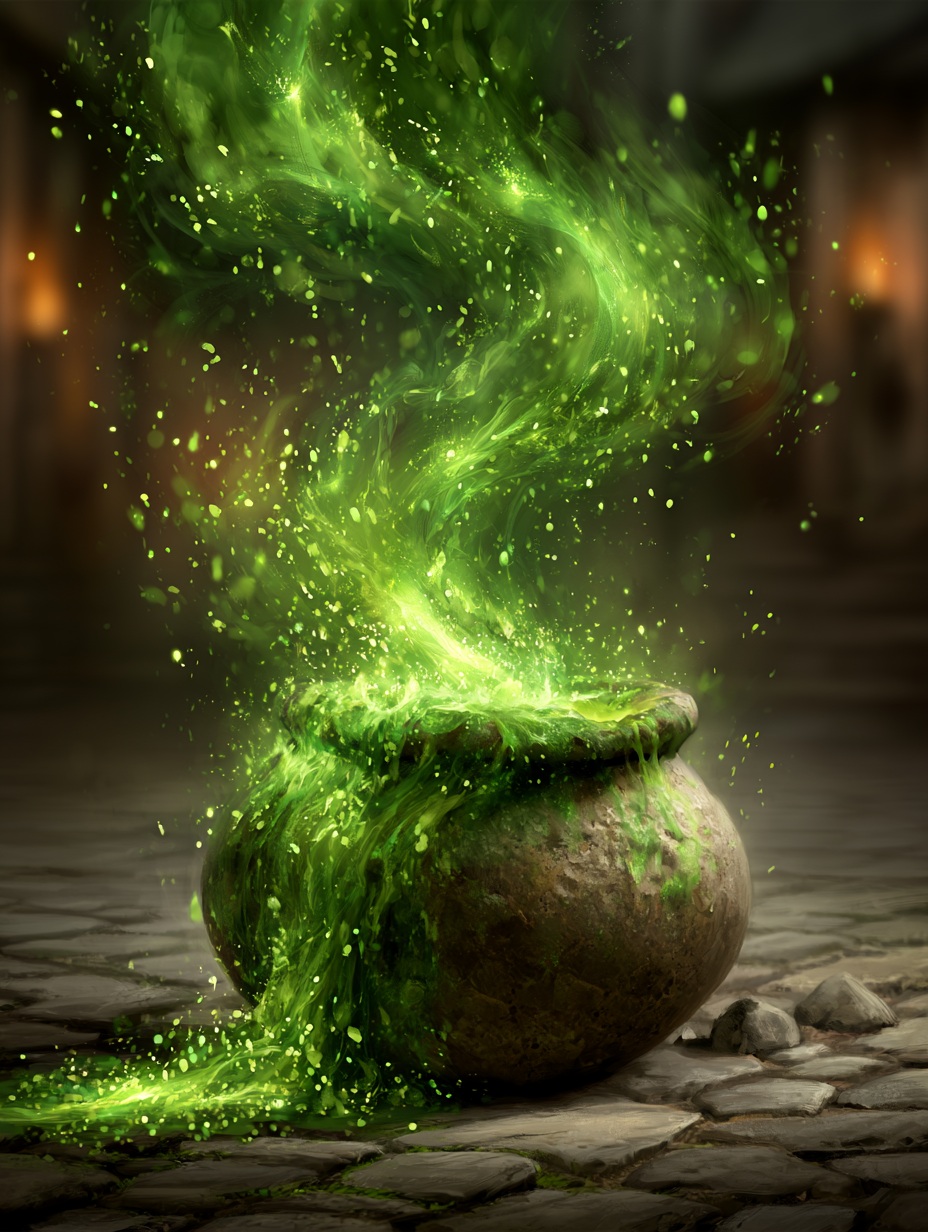
"A clever artificer once spent ten years creating a lantern that never needed fuel. Another spent a week inventing Glowpaint. History remembers only one of them."
Item type
Magical
Rarity
Common
Base Price
10 gp



good job