


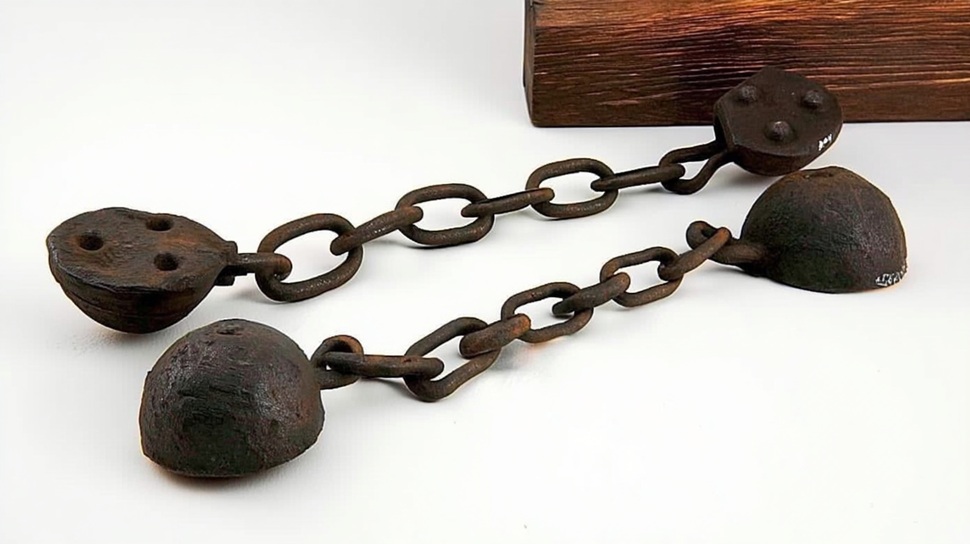
Chain Shot
Aim For The Mast!
"Gold sinks with the ship. A mast don't. That's why I fire chain shot first. Leave 'em floating long enough to watch me steal everything they ever owned."
Few weapons demonstrate the difference between destroying a ship and capturing one more clearly than chain shot.
Unlike the solid iron cannonball intended to smash through hulls and fortifications, chain shot is built to dismantle everything above the deck. It consists of two smaller iron balls connected by a short length of heavy chain or forged iron links. Upon leaving the cannon's muzzle, centrifugal force sends the two halves spinning around one another in a violent blur of iron and steel. Rather than striking a single point with overwhelming force, the projectile scythes through everything in its path, tearing rigging apart, snapping spars, shredding sails, and reducing carefully maintained masts to splintered timber.
The effectiveness of chain shot depends almost entirely upon timing and distance. Fired too early, the spinning projectile loses stability before reaching its target. Fired too late, it may never have sufficient room to spread. Experienced naval gunners therefore reserve chain shot for the moment opposing vessels draw dangerously close, where accuracy matters more than raw power and every damaged sail can determine the outcome of the engagement.
Its purpose has never been to sink ships.
It is to leave them helpless.
A sailing vessel without functioning rigging becomes little more than a drifting platform. Torn sails rob it of speed. Broken yards leave replacement canvas impossible to raise. Snapped masts can collapse across the deck, crushing crew members beneath tons of timber and tangled rope while rendering entire batteries of cannon unusable. Even a victorious crew may spend days making emergency repairs before their vessel can safely return to sea.
For naval powers charged with protecting trade routes, this makes chain shot an indispensable tool. Merchant escorts often prefer capturing pirate vessels intact rather than consigning valuable cargo to the bottom of the sea. Likewise, privateers and naval captains seeking prizes know that every intact hull represents potential wealth. A captured ship may be repaired, sold, commissioned into service, or stripped for supplies. None of those options remain available after a vessel has been blasted apart by conventional cannon fire.
Pirates, unsurprisingly, embraced the ammunition for entirely different reasons.
A pirate captain earns little by sinking merchants outright. Cargo, provisions, charts, firearms, and prisoners all disappear beneath the waves along with the prize. Chain shot offers a more profitable solution. A crippled vessel cannot outrun pursuit, cannot effectively maneuver to bring its guns to bear, and often loses the ability to flee altogether. Once the target lies dead in the water, boarding parties can overwhelm the crew with comparatively little risk while preserving everything worth stealing.
The weapon has found uses beyond the open sea as well. Coastal fortresses sometimes maintain small reserves for defending narrow harbors where enemy vessels must approach at predictable angles. River navies employ lighter versions against barges and warships operating in confined waterways. Even great flying vessels powered by magical means have occasionally fallen victim to chain shot, whose spinning mass proves alarmingly effective against exposed spars, lifting surfaces, suspended platforms, and other vulnerable structural components.
Loading chain shot demands greater care than ordinary ammunition. The linked projectiles must be seated correctly within the barrel to avoid fouling the cannon or producing an erratic flight path. Improperly loaded rounds have been known to damage the firing vessel as readily as the intended target, earning inexperienced gunners stern warnings from every competent artillery master.
Despite advances in naval warfare, chain shot remains one of the most feared forms of cannon ammunition ever devised. Sailors know that a hull can often be patched. Holes can be plugged, pumps manned, and leaks slowed. But when the wind itself has been taken away, when the masts lie shattered across the deck and the sails drift into the sea as useless canvas, a ship loses something far more valuable than timber.
It loses its freedom.
For that reason, seasoned captains rarely judge an enemy's intentions by where the first cannonball lands. If the opening salvo smashes the hull, the attacker intends to destroy them. If it comes screaming through the rigging with iron spinning in a blur of broken chain, the message is altogether more unsettling.
Someone intends to come aboard.
Chain Shot
A pair of heavy projectiles linked by a length of chain, designed to spin through the air and tear apart sails, rigging, oars, propellers, and other exposed vehicle components.
| Damage | Range | Weight | Cost |
|---|---|---|---|
| Special | 300/1,200 ft. | 20 lb. | 20 gp |



Comments