


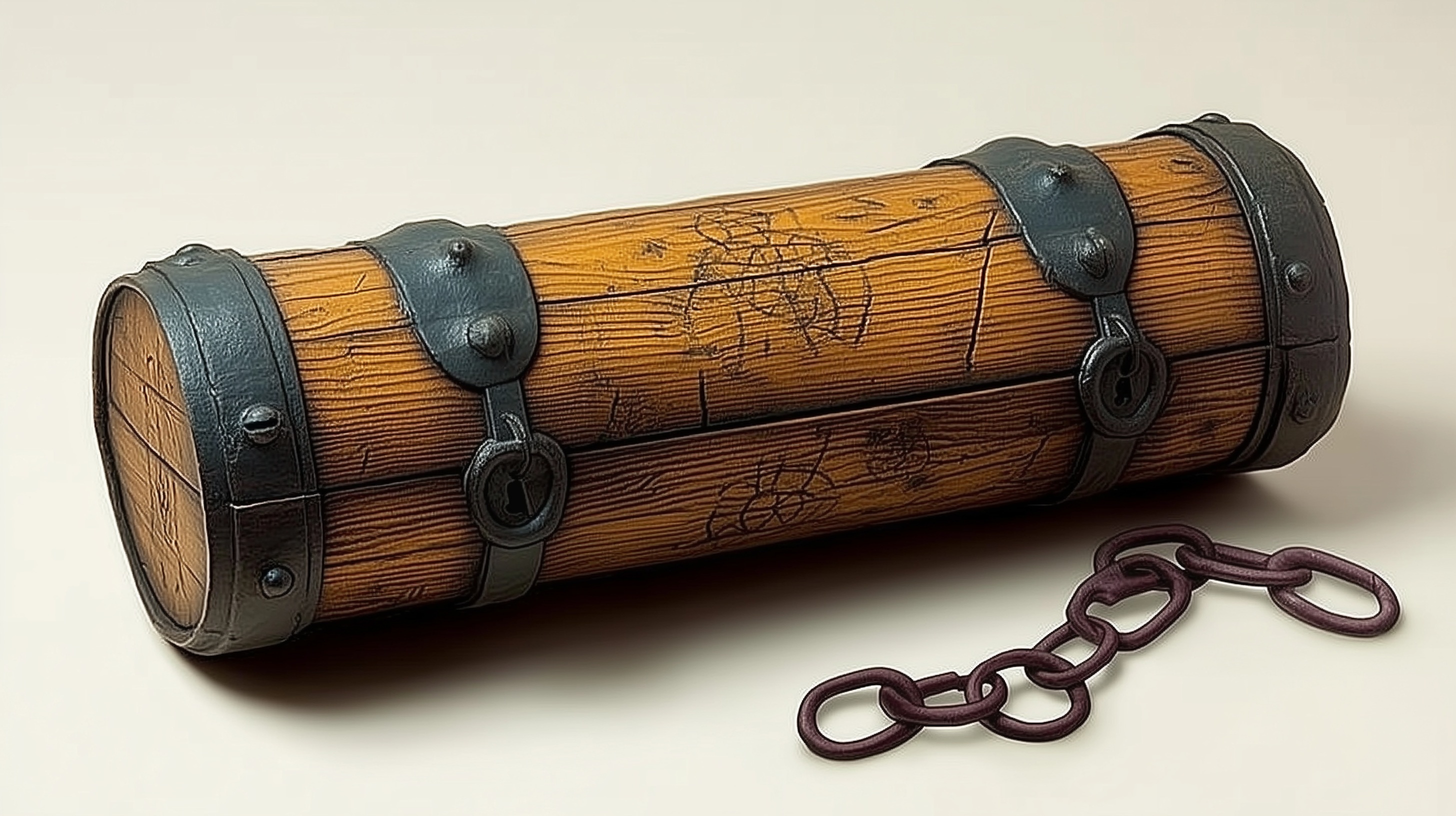
Canister Shot
This Is Your Last Shot
"Round shot sinks ships. Chain shot catches them. Canister? Canister reminds every poor bastard on deck that cannon don't care what your name was."
If the cannonball is the hammer of naval warfare, canister shot is its scythe.
A canister round consists of a thin metal container packed with dozens of iron balls, scrap metal, or other deadly projectiles. Upon firing, the container bursts apart almost immediately after leaving the cannon's barrel, transforming the weapon into an enormous shotgun. Instead of delivering a single crushing impact, the cannon projects a wide cloud of lethal fragments capable of sweeping an entire section of a battlefield clean in an instant.
The ammunition was never intended to destroy fortifications or sink ships. It exists for one purpose alone.
To kill people.
At long distances, canister loses much of its effectiveness as the individual projectiles spread apart and rapidly lose energy. At close range, however, few weapons in history can match its sheer destructive potential. A single discharge can cut through tightly packed infantry formations, clear boarding parties from crowded decks, or devastate cavalry before they ever reach friendly lines. Veterans often describe its effects less as a cannon firing than as an invisible wall of iron racing across the battlefield.
Naval crews reserve canister for the final moments before enemy vessels close alongside. As boarding hooks fly and grappling lines tighten, ordinary cannonballs become nearly useless. There is no room to maneuver, no safe angle for smashing hulls, and little desire to destroy a prize ship that may soon belong to the victor. Instead, the guns are loaded with canister and fired directly into enemy decks, where the spreading blast tears through sailors, marines, officers, and boarding parties alike. A single broadside delivered at the right moment can decide an engagement before the first cutlass is ever drawn.
Land armies employ canister with equal enthusiasm and equal dread. Artillery crews positioned behind infantry lines often hold their fire until charging enemies commit to their assault. At that decisive moment, the guns unleash canister into formations already too close to halt or scatter. Entire ranks can disappear beneath a storm of iron before the survivors ever come within sword's reach.
The psychological effect is almost as significant as the physical one.
Most battlefield weapons kill individuals. An arrow finds one target. A musket ball claims another. Even a solid cannonball leaves destruction confined to a narrow path. Canister ignores such distinctions. It does not seek heroes or cowards, officers or recruits. Anyone standing within its spread becomes equally vulnerable. Survivors often speak of seeing entire files of soldiers collapse simultaneously, leaving only drifting smoke and stunned silence where disciplined formations had stood moments before.
Because of its terrible efficiency against living targets, canister has earned an infamous reputation among professional soldiers. Some regard it as merely another tool of war. Others consider its use against fleeing troops or civilian populations an unforgivable atrocity. Military codes in many nations regulate when artillery may employ the ammunition, though pirates, raiders, and less disciplined armies seldom trouble themselves with such distinctions.
Despite its fearsome reputation, canister remains surprisingly simple to manufacture. A sturdy tin or thin iron cylinder, a measured powder charge, and whatever metal projectiles are available are often sufficient. Wealthier armies prefer precisely cast iron balls for consistent performance, while desperate defenders have filled canisters with nails, bolts, broken chain, stones, shattered horseshoes, glass, and nearly any hard object capable of becoming a projectile. In times of siege, necessity frequently proves more important than elegance.
No experienced artillery officer wastes canister at extreme range. Doing so squanders one of the most terrifying weapons in an army's arsenal. Instead, disciplined gunners wait with unnerving patience, allowing the enemy to draw ever closer while resisting every instinct to fire too soon. Only when the range has become almost uncomfortably short do they touch the match to the vent.
By then, retreat is usually no longer an option.
For those standing before the muzzle, the distinction between a cannon and a giant firearm becomes tragically academic. They experience only a deafening roar, a wall of smoke, and an instant in which the battlefield itself seems to erupt into flying iron. Those fortunate enough to survive seldom forget the sound.
Those who do not never hear it twice.
Canister Shot
A metal canister packed with small iron or lead projectiles, designed to burst from a cannon’s muzzle in a devastating close-range spread against tightly grouped creatures.
| Damage | Range | Weight | Cost |
|---|---|---|---|
| Special | 60-ft. Cone | 20 lb. | 15 gp |



Comments