


Bureaucrat
The Halls Of Power
"Empires do not collapse when kings die. They collapse when nobody knows where the records are."
Most people see governments as collections of powerful individuals.
You learned they are collections of paperwork.
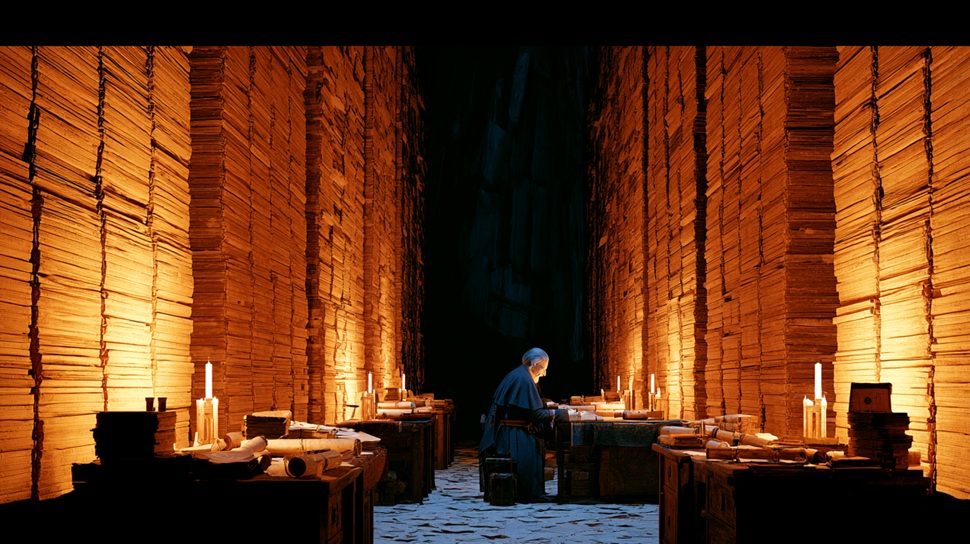
Kings issue decrees. Councils pass legislation. Generals issue orders. Magistrates render judgments. These actions attract attention because they are visible. What most people never see is the machinery operating beneath those decisions. Every law must be recorded. Every tax must be documented. Every census must be compiled. Every permit must be filed. Every decision must be communicated, archived, reviewed, and enforced.
Someone has to make all of that happen.
For years, that someone was you.
Whether you served a kingdom, republic, city administration, temple bureaucracy, military command, guild authority, or noble estate, your responsibilities placed you inside the vast machinery that transforms decisions into reality. You learned that institutions do not survive because of inspiring leaders alone. They survive because countless clerks, scribes, administrators, record keepers, and officials perform thousands of small tasks correctly every day.
Most people only notice bureaucracy when it fails.
You spent your life ensuring it did not.
The profession quickly teaches a lesson that outsiders rarely appreciate. Information is a form of power. Records determine who owns land, who owes taxes, who possesses authority, who is entitled to privileges, and who bears responsibility when things go wrong. Entire fortunes, careers, and political movements can depend upon documents stored in forgotten cabinets or dusty archives.
Because of this, bureaucrats develop unusual habits.
You learned to keep careful notes. You learned to verify information before acting upon it. You learned that details matter because details eventually become consequences. A missing signature can delay an important shipment. An inaccurate census can affect taxation for years. A misplaced report can create confusion that spreads throughout an entire institution.
Small errors have a tendency to grow.
Experience also taught you that organizations rarely function exactly as their rules suggest. Official charts display authority in one way. Daily reality often operates differently. The person holding the highest title may not possess the greatest influence. A veteran clerk may understand an office better than the official appointed to supervise it. A seemingly insignificant administrator may quietly control the flow of information that everyone else depends upon.
Over time, you learned to recognize these realities.
Most people ask who is in charge.
A bureaucrat asks who actually makes the decisions.
This perspective made you an observer of institutions rather than merely a participant within them. You learned how departments interact. You learned where responsibilities overlap and where they disappear entirely. You learned which procedures exist for practical reasons and which survive only because nobody remembers how to remove them.
You also learned patience.
Few professions expose a person to frustration as regularly as administration. Citizens arrive angry. Officials make unrealistic demands. Records go missing. Regulations contradict one another. Urgent matters somehow become trapped beneath paperwork. The work requires an ability to remain calm while others lose their composure.
Eventually, complexity becomes familiar.
What appears confusing to outsiders often seems straightforward to you because you understand the underlying structure. Every institution develops its own language, traditions, procedures, and assumptions. Learning those systems allows you to navigate them efficiently while others become lost.
The profession also reveals uncomfortable truths.
Bureaucracies preserve stability, but they can also preserve injustice. Regulations intended to solve one problem may create another. Procedures designed to ensure fairness may become obstacles to compassion. Institutions frequently continue operating long after the people within them have forgotten why certain rules exist.
Many bureaucrats spend their careers balancing efficiency against humanity.
Some conclude that rules matter above all else.
Others become reformers.
Most settle somewhere in between.
You understand that systems are necessary because societies require organization. At the same time, you understand that systems exist to serve people rather than the reverse. The tension between those ideas never fully disappears.
Years spent among records, offices, archives, and administrative procedures also gave you access to remarkable information. You know how institutions store knowledge. You understand where records are kept, who maintains them, and what kinds of information tend to disappear when powerful individuals become uncomfortable.
History often survives because someone filed the paperwork correctly.
Even now, old habits remain difficult to abandon. You notice inconsistencies in stories. You pay attention to official procedures. You instinctively wonder who approved a decision, where the documentation exists, and whether the explanation being presented matches the records.
Most people see a government and think about its leaders.
A bureaucrat thinks about the thousands of invisible systems keeping it alive.
Most people ask who holds power.
A bureaucrat asks where the records are kept.

"The public imagines governments are run by rulers. Governments are run by the clerk who knows where the correct form is filed."
Type
Government





oof. The power of paperwork and information. I feel this. It really is true that people don't appreciate this until things aren't working the way that they should.
This one was born of personal experience. 20 year vet of civil service.
Oh then you know. I've got 20 years in nursing so yeah. It's all about the paperwork!