


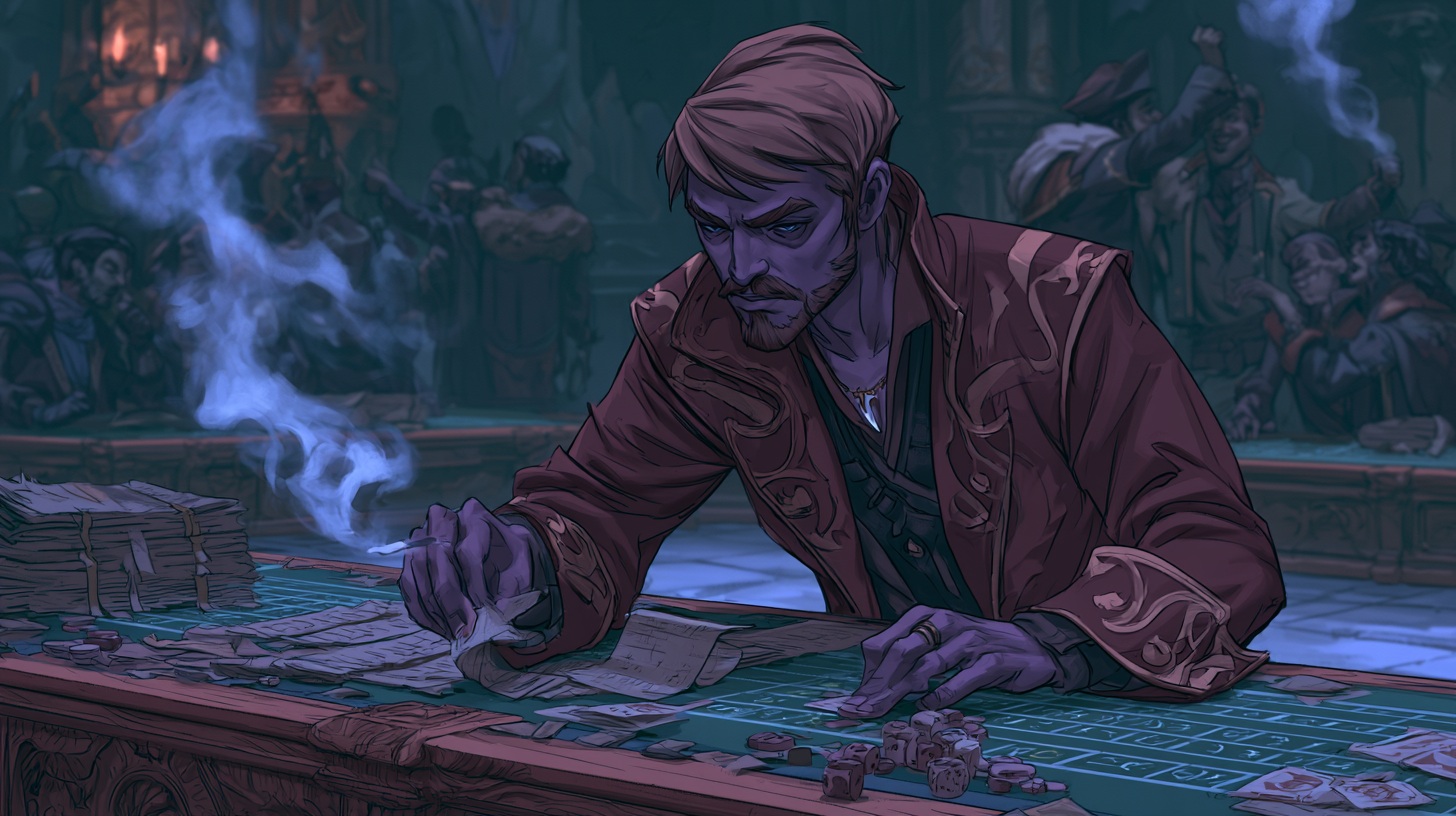
Bookie
Let It Ride
"Everyone thinks gambling is about luck until they watch the money move. The smart bettors study horses. The smarter bettors study jockeys. The smartest bettors study who suddenly stopped taking wagers two days before the race."
Most people think gambling is about luck.
Bookies know better.
Luck certainly exists. Anyone who spends enough time around dice, cards, races, contests, and wagers learns that strange things happen. Fortunes appear overnight. Sure things collapse unexpectedly. Long odds occasionally become reality. Yet successful bookmakers do not survive by believing in luck. They survive by understanding people.
A wager is rarely about the event itself.
It is about what people believe will happen.
Whether the subject is a prize fight, horse race, griffon derby, royal succession, trade expedition, monster hunt, political election, military campaign, or tomorrow's weather, every wager begins with uncertainty. Some people fear uncertainty. Others are fascinated by it. Bookmakers build their entire profession around measuring it.
At first glance, the work seems simple. Someone wants to place a bet. Someone else is willing to take the opposite side. Money changes hands. The event occurs. Winners are paid.
The reality is considerably more complicated.
A good bookmaker must constantly gather information. They need to know which fighter injured their hand during training. Which merchant expedition quietly hired additional guards. Which noble family is experiencing internal conflict. Which ship departed later than expected. Which horse has stopped eating. Which weather patterns have become unusual. Which rumors are nonsense and which rumors appeared suspiciously close to the truth.
Most importantly, they must understand people.
People reveal their hopes, fears, biases, ambitions, and secrets whenever money becomes involved. The proud gambler wagers because they believe they are smarter than everyone else. The nervous merchant wagers to protect against losses. The desperate laborer chases a fortune that could solve every problem in their life. The wealthy aristocrat wagers simply because they enjoy the excitement.
A bookmaker who listens carefully learns far more than odds alone.
This is one reason bookies occupy such an unusual place within society. They exist at the intersection of information, commerce, entertainment, and vice. Gamblers seek them out. Criminals tolerate them. Merchants occasionally use them. Authorities frequently distrust them. Yet all of those groups continue to interact with them because bookmakers provide something many people secretly crave.
A way to measure uncertainty.
The best bookmakers develop extensive networks of contacts. Tavern owners hear rumors before officials do. Stable hands notice problems long before race spectators. Dockworkers know which ships arrived damaged. Servants overhear conversations their employers assume remain private. Couriers, laborers, gamblers, merchants, sailors, and entertainers all carry fragments of information. Individually those fragments may seem worthless. Together they create a remarkably accurate picture of events.
This makes successful bookies valuable sources of information even for people who never place wagers themselves.
Years spent tracking outcomes also teach bookmakers a particular way of viewing the world. They become accustomed to evaluating probabilities rather than certainties. While others argue endlessly about what will happen, a bookmaker often asks a different question.
How likely is it?
This perspective frequently makes them surprisingly practical. They learn that confidence and accuracy are not the same thing. They learn that experts can be wrong. They learn that unlikely events occur more often than most people expect. Above all, they learn that people regularly make decisions based on emotion rather than evidence.
A bookmaker who survives for many years becomes an expert observer of human behavior.
In lands scarred by the Shattering, bookmakers often thrive because uncertainty thrives. Trade routes shift unexpectedly. Kingdoms rise and fall. Political alliances change. New opportunities appear while old certainties disappear. Every major development creates questions, and questions inevitably attract wagers.
Will the expedition return?
Will the treaty hold?
Will the harvest survive?
Will the claimant seize the throne?
Someone is always willing to bet on the answer.
Of course, the profession carries risks. Bookmakers regularly deal with debt, desperation, and disappointment. A gambler who loses everything may become dangerous. A criminal organization may demand a share of profits. A powerful noble may refuse to honor a loss. Competitors may attempt to manipulate outcomes or spread false information.
For this reason, reputation matters more than wealth.
A bookmaker's business depends upon trust. Gamblers must believe that legitimate winners will be paid. Contacts must believe their information will be handled discreetly. Associates must believe promises will be honored. Once that trust disappears, a bookmaker rarely remains successful for long.
Many bookies eventually discover that their greatest asset is not money at all.
It is credibility.
Coin comes and goes. Fortunes rise and fall. Winning streaks end. Markets change. Information loses value as soon as it becomes public.
A reputation for honoring your word can survive all of those things.
Most people see gambling as a contest between luck and skill.
A bookmaker sees something different.
They see a thousand people trying to predict the future and revealing themselves in the process.
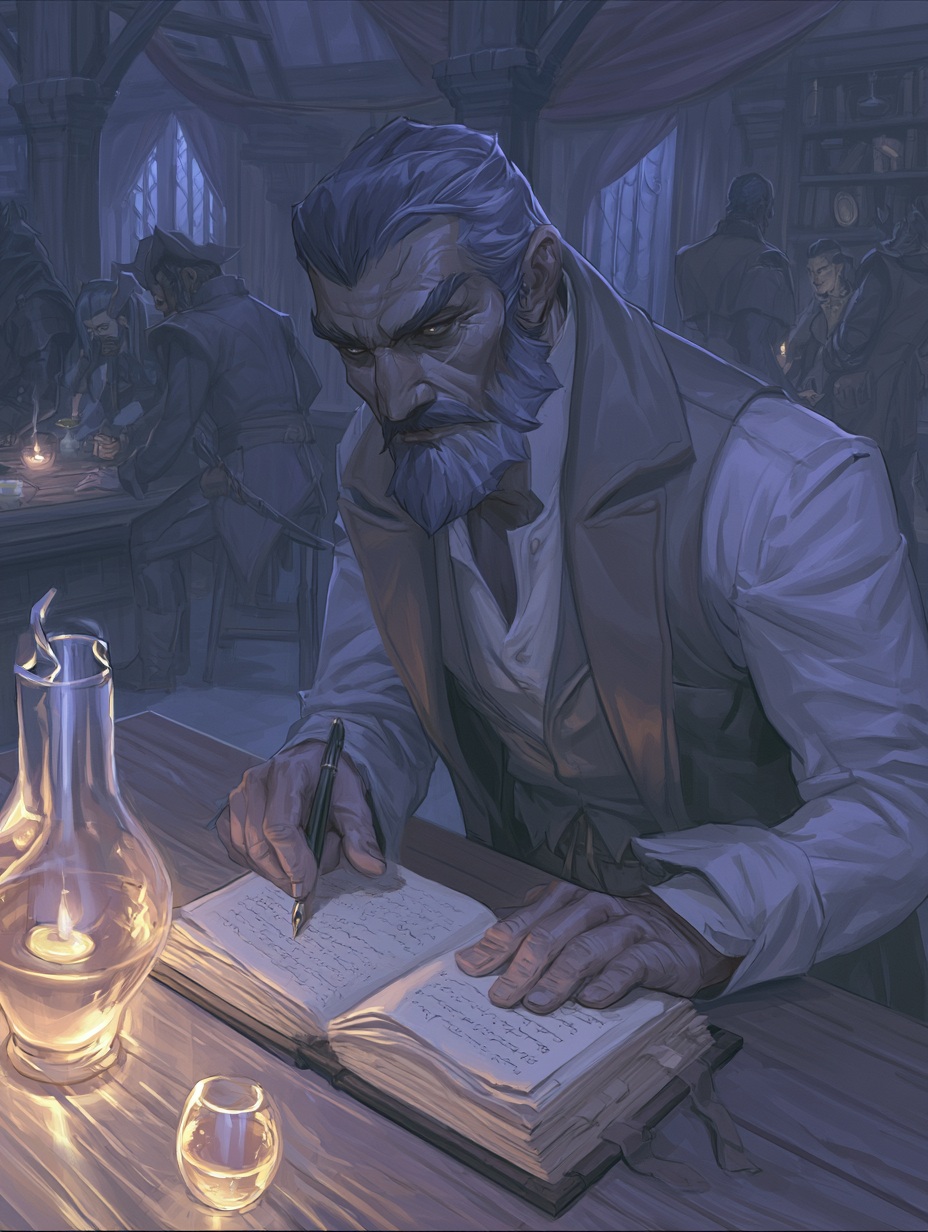
"People say nobody can predict the future. They're right. But if you listen carefully enough, you can usually tell who already knows more than they're pretending to know."
Type
Illicit



Comments