



Blackmailed
I'll Expose You
“They never ask for much at first. That's how you know it is not about what they want. It's about whether you'll obey.”
A blackmailed individual is someone whose life no longer belongs entirely to them.
At some point, something was taken. Not in the physical sense, not always. Information. Evidence. A truth, or something convincing enough to serve as one. Whatever it is, it exists outside their control, held by someone willing to use it. That alone is enough.
The nature of the leverage matters less than its effect. It may be real, a crime committed, a betrayal hidden, a past that cannot withstand scrutiny. It may be fabricated, constructed carefully enough that proving it false would come too late to matter. In either case, the outcome is the same. Exposure carries consequences severe enough that resistance becomes a risk.
From that moment forward, every decision is made under pressure.
Blackmail does not operate through constant force. It does not need to. Its strength lies in anticipation. The message that may come. The demand that may follow. The uncertainty of when silence will break. A life shaped this way becomes one of careful movement, measured speech, and constant awareness of what might be known by others.
Communication is rarely direct for long. Instructions appear in ways that discourage traceability. A note where no one else would look. A message passed through someone who does not understand its meaning. A pattern established over time that becomes routine, even as it remains unsettling. The method matters because it reinforces the imbalance. The blackmailer controls when contact happens. The subject learns to wait.
That waiting is its own form of control.
In settlements where trade, information, and influence intersect, systems naturally emerge to support this kind of exchange. Dead drops, intermediaries, coded signals. None of these are unique to blackmail, but all of them serve it well. Those who live under this pressure learn to recognize these patterns quickly, not because they want to, but because they must. The same networks that move goods and rumors also move secrets, and secrets carry weight.
Over time, the strain changes behavior.
Speech becomes deliberate. Relationships become difficult to maintain. Trust erodes, not necessarily because others are unworthy of it, but because the risk of exposure makes openness dangerous. Even casual interactions are measured against what might be revealed unintentionally. The simplest question can feel like a probe. The smallest mistake can feel catastrophic.
Some adapt by becoming controlled, precise, almost detached. Others fracture under the pressure, making reckless choices in an attempt to regain control. Both responses are predictable. Both can be exploited.
The blackmailer understands this.
Because the leverage is rarely the end goal. It is a tool. What is demanded may begin small. Information passed along. A favor performed. A meeting arranged. Compliance establishes a pattern. Each act reinforces the dynamic, making the next demand easier to enforce. Escalation does not need to be immediate. It only needs to be inevitable.
There is always a threshold.
A point where the cost of compliance exceeds the cost of exposure. Some never reach it, choosing survival over resistance for as long as possible. Others reach it quickly, deciding that whatever happens next cannot be worse than continued control. Neither choice guarantees a clean outcome.
Because ending blackmail is not simple.
Finding the source may not end it. The leverage may exist in more than one place. Others may be involved. The information may already be positioned to surface if something goes wrong. What appears to be a single adversary may instead be part of a larger structure built around the trade of secrets and influence.
And even if the source is removed, the damage remains.
A blackmailed individual does not return to the life they had before. The awareness does not fade. The understanding that identity, reputation, and safety can be controlled by something as fragile as information does not disappear once the immediate threat is gone.
It lingers.
Because the truth of the situation is simple and difficult to escape.
The leverage only works because there is something to lose.
And once that is understood, it becomes very hard to believe it could never happen again.
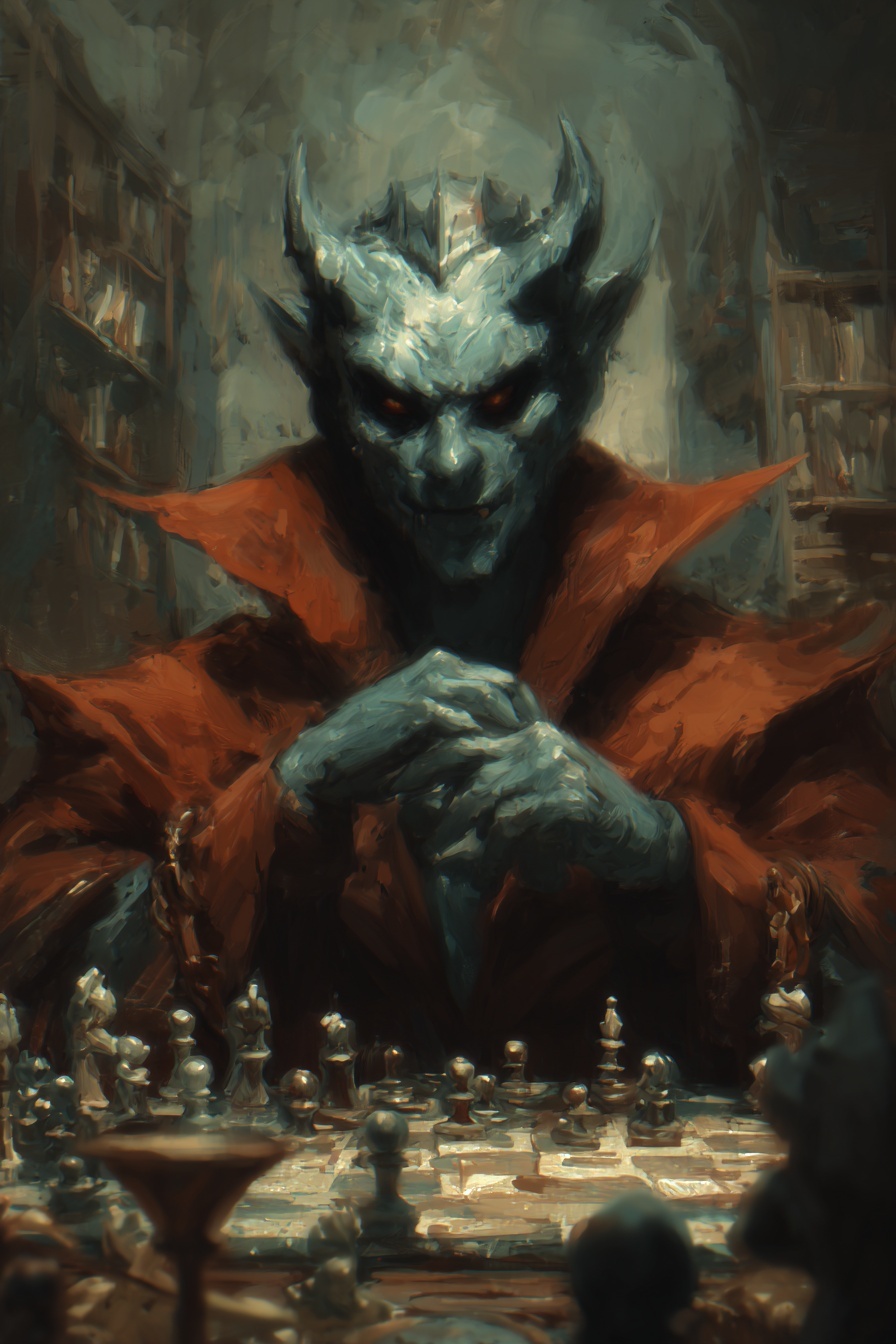
“They never threaten what you value most. Not at first. They let you keep that, just long enough to prove they can take everything else whenever they please.”



I like this series of noir-style backgrounds, good job!
There's plenty more on the way! I'm so glad you like them! <3