

Bayonet
Get Right To The Point
"See that blade on the end of the musket? If you're on the wrong side of it, that's liable to be the last time you're wrong about anything."
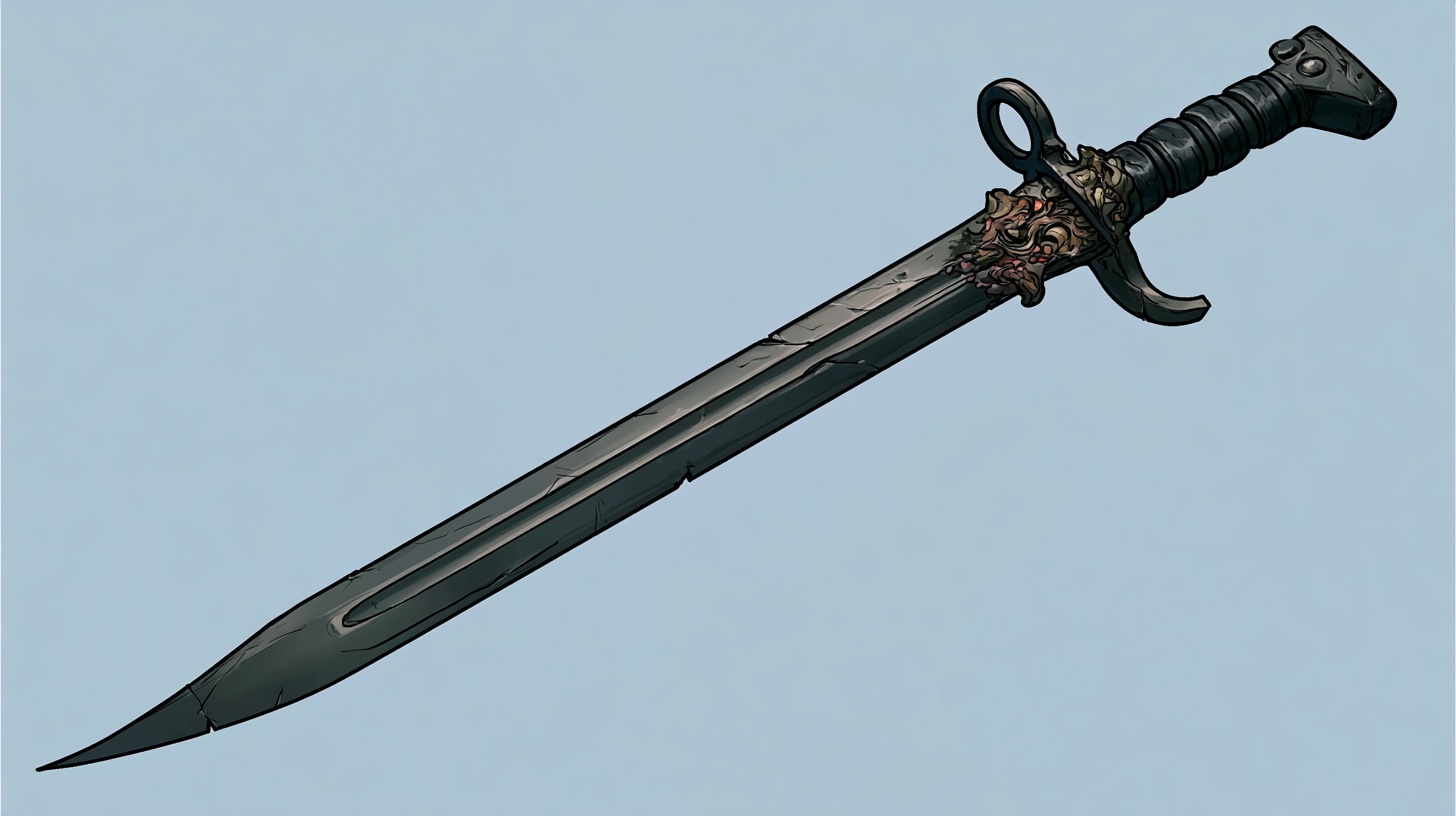
The bayonet is a compact blade designed to serve two purposes. Carried as a practical fighting knife when detached, it can also be fixed to the muzzle of a compatible firearm, transforming the weapon into a serviceable spear for close-quarters combat. This simple innovation allows soldiers to continue fighting after firing a volley, eliminating the need to draw a separate melee weapon when enemy lines close.
Bayonets are most commonly issued to professional armies, militias, city watches, and naval forces equipped with muskets or rifles. Military training places considerable emphasis on bayonet drills, teaching soldiers to thrust, brace, and maneuver in formation. A disciplined line of infantry armed with fixed bayonets presents a formidable obstacle, capable of holding ground even after expending its ammunition.
Though primarily a military tool, the bayonet also serves as a dependable utility knife. Soldiers use it to cut rope, prepare food, clear brush, and perform countless camp tasks between battles. Many veterans come to value a well-balanced bayonet as much for its everyday usefulness as for its effectiveness in combat.
Most bayonets feature a straight, double-edged or single-edged blade mounted to a locking mechanism designed to fit securely beneath or around a firearm's barrel. Military examples favor durability and ease of maintenance over ornamentation, while ceremonial versions carried by elite guards or officers may feature polished steel, engraved fittings, or decorative grips bearing the insignia of their regiment.
Although firearms have transformed warfare, they have not eliminated the brutal reality of hand-to-hand combat. Battles often collapse into confusion where smoke obscures vision, ammunition runs low, and opposing lines meet at arm's length. In those moments, the bayonet reminds every soldier that even the most advanced weapon may ultimately be called upon to serve as little more than a sharpened piece of steel fixed to the end of a sturdy pole.
Bayonet
A blade designed to be fixed beneath the barrel of a firearm, allowing the weapon to serve as a spear in close combat.
| Damage | Properties | Mastery | Weight | Cost |
|---|---|---|---|---|
| 1d6 Piercing | Special | Push | 1 lb. | 5 gp |



Comments