


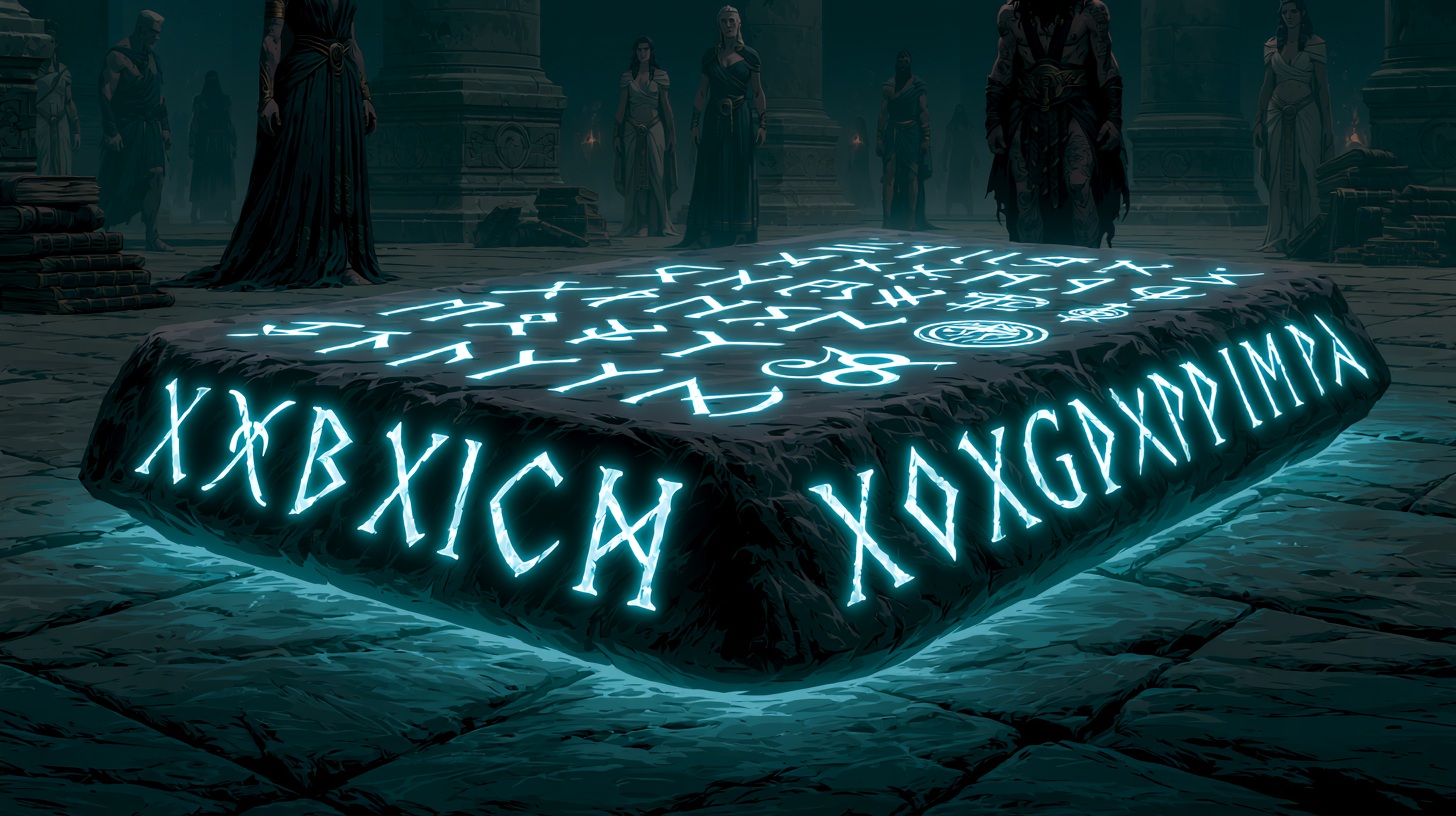
Arcane Analysis
The Path of Magic
"The greatest advantage in a duel isn't casting the stronger spell. It's already knowing the one your opponent is about to cast."
Every spell reveals more than its immediate effect.
To most spellcasters, a spell exists only for the brief moment between its casting and its conclusion. Once the magic fades, only the result remains. A burned wall, a shattered lock, a lingering enchantment, or the memory of a brilliant display of arcane power are all that most observers perceive.
Experienced mages know better.
Every spell is an expression of a carefully constructed pattern, and those patterns leave subtle impressions upon the minds of those capable of recognizing them. The gestures chosen by the caster, the cadence of an incantation, the flow of magical energy, and even the spell's lingering resonance all reveal information to a sufficiently trained observer.
Most people simply never learn how to listen.
Students who develop this talent quickly discover that no two spellcasters cast in exactly the same way. Individual habits, regional traditions, and personal refinements all influence the final performance, yet beneath those superficial differences lies the same underlying magical structure. Once recognized, that structure becomes surprisingly difficult to forget.
Veteran duelists often describe the experience as learning an opponent's stance rather than memorizing a single attack. After careful observation, the spell ceases to be an unknown threat and instead becomes a familiar pattern whose strengths, weaknesses, and limitations are easier to anticipate.
Arcane academies have long encouraged students to observe one another's practical examinations for precisely this reason. Watching spells being cast broadens a wizard's understanding of magical theory in ways that books alone cannot. While most students focus on copying successful techniques, a few develop a habit of dissecting every spell they witness, mentally reconstructing its architecture until they understand not only what it accomplishes, but how it accomplishes it.
That deeper understanding often proves invaluable.
Spellcasters who have carefully studied a particular spell instinctively recognize the subtle moments when its magic is most vulnerable. Defensive wards become easier to anticipate. Enchantments lose much of their mystery. Even hostile magic feels less overwhelming when its inner workings are no longer entirely unknown.
The same familiarity also benefits those tasked with unmaking magic.
Every successful use of Dispel Magic depends upon understanding the spell being unraveled. A mage who has already analyzed the structure of a particular enchantment possesses a distinct advantage over one confronting it blindly. Rather than attempting to dismantle an unfamiliar construction piece by piece, they already know where its critical supports are likely to be found.
Professional mage hunters, inquisitors, battlefield arcanists, and magical investigators frequently cultivate this discipline. Many become walking catalogs of the most commonly encountered spells, capable of recognizing dangerous magic almost as quickly as it is cast. Others specialize in studying the signature techniques of rival spellcasters, patiently observing them over weeks or months before any confrontation ever occurs.
Among experienced adventurers, the practice inspires another old saying.
"The second time a wizard surprises you with the same spell, it isn't the wizard's fault."
Knowledge has always been one of magic's greatest advantages.
For those who study the architecture hidden within every spell, it can become one of its greatest defenses as well.
"Magic always tells you what it intends to do. The trick is learning to watch the spell instead of the spectacle."



Comments