Halohue Cotton
This article was created as an entry for a Summer Camp prompt! That means this article may be a rough draft, incomplete, or may not fully align with the world's lore. If you want to see this developed in the future, let me know!
The dress she wore to the Bloomburst just about took my breath away. She LOOKED like a flower herself!Halohue cotton is a fabric prized for its softness and unique coloration.
Fabric of the Festival
The Festival of Blooms is abundantly blessed with seasonal materials and resources, resulting in countless unique and delightful trade materials being produced. One particular fabric stands out from the rest, however, its properties drawing it into the spotlight as the Festival's unofficially-official trademark.Blossoming Color
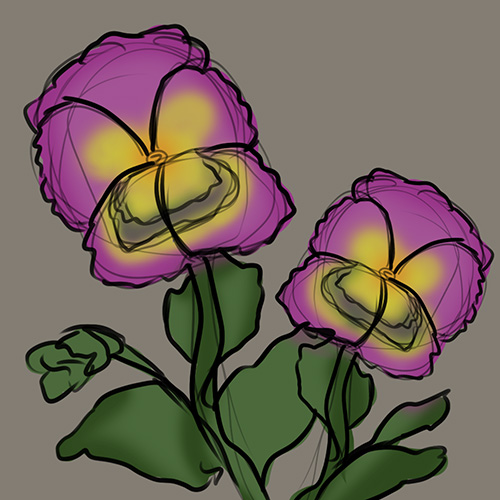
Pink, into yellow, into green, then fade...The most common forms of halohue cotton are rather what they sound like: fabric woven from natural cotton fibres, colored with dyes crafted from the halohue pansy flower. The fabric itself is traditionally a thin, almost sheer weave, perfect for light and airy clothing ideal for the warm seasons. This fabric is a favorite among festival-goers for its embodiment of the spring's bloom, with its warm and vibrant colors that halo gently from one into the next. The dye crafted from the halohue pansy is unique in the way its colors shift as they bleed and set during the dyeing process, which requires a steady and patient hand to apply correctly.
The Real Deal
This traditional form of halohue cotton, with its thin weave and 100% cotton composition, is typically regarded as the "true" form of the material, and would be what most artisans expect when purchasing or requesting the material for their crafts. However, other types of fabrics and fibres can be woven into cloth and dyed using the halohue dye, with the end result still being considered "halohue cotton." Crafting halohue cotton from other materials, whether they be other natural plant fibres or synthetic materials, allows for more versatility in artisan crafting, especially in fashion.The only stern requirement for a textile to earn this name is its ability to take the dye and wear its colors well. Changing the dye itself eliminates the material altogether — no imitation halohue!






Interesting how it's classified via dye rather than fabric, given that detail, it makes the common colors section all the more important. Great work my friend!
Your freind,
The Graiffe
Working hard at Summercamp 2026